An Autodidact’s Guide to Nomenclature
Because musical composition cannot really be taught, born composers are compelled by their condition to be lifelong autodidacts. Objective, quantifiable skills, on the other hand, can be instilled by a teacher. Because I never doubted that I had something to say, or the right to express it—any more than a hound questions its capacity to bay—I skipped straight to looking at scores and plundering theory textbooks for technical guidance and the sort of intellectual understanding that absolutely must underpin intuition.
Sooner or later, hungry for tools, signposts, or simply ideas to steal, every composer finds the time to crack an orchestration manual, a theory book, or a volume of essays and memoirs. My entryway into learning music was the Mills Music Library at the University of Wisconsin–Madison. When I returned there from the East Coast in the spring of 2026 to attend a reception celebrating the library’s acquisition of my archives, sketches, and papers—the place where I spent so many deeply happy hours as a teenager and undergraduate between the pages—the librarians can attest that I wept happy tears at the collection’s familiar scent.
I taught myself to notate music in 1973 by writing the letter names of the notes next to the noteheads in Scott Joplin piano pieces. My textbook? Vera Brodsky Lawrence’s famous 1971 scholarly edition, The Collected Works of Scott Joplin: Works for Piano, which my mother had ordered directly from the New York Public Library for me.
As a bee to the honey drawn in summer 1976, I began learning orchestration from a softcover copy of Rimsky-Korsakov’s great Principles of Orchestration snagged at the Waldenbooks in the Brookfield Square mall. While its utility is lessened because all of the musical examples are drawn from his own music, the first fifty pages (covering how to score chords and balance the interplay between orchestral choirs) remain the gold standard.
In October 1976, while visiting my brother Kevin, I bought a used copy of Materials and Structure of Music from a guy on the street in Madison. It was written by an Indiana University-based team of scholars that included Christ, DeLone, and Kliewer. I wrote all over that one—particularly in the chapter on Sonata-Allegro form. My favorite remembered pleasure is scribbling, “C is home in a literal sense—all changes coincide with intentional thematic development.” I liked that this view of Western tonal theory treated melody, rhythm, and harmony as equal components. They weren’t generated from a set of core principles that left you “wrong” if you didn’t hear things the way the author did.
In 1978, I began theory lessons at the Wisconsin Conservatory of Music. At the behest of Judy Kramer, I plowed through Arnold Schoenberg’s Fundamentals of Music Composition. I still have the thing, heavily dog-eared and highlighted. However, because I spent most of my time listening to music written after 1930, the book’s reliance on standard repertoire—mostly Beethoven and Brahms, if I remember correctly—weakened its utility for me.
Walter Piston’s Orchestration remains a treasured old friend. I bought my copy second-hand at the Harry Schwartz Bookshop on the way to a double bill at the Oriental Landmark Theater in August 1979—I know this because of a note I wrote to myself on the flyleaf. It is now so well-thumbed that the spine is reinforced with packing tape. To me, it reads like a diary. Here, at random, are some marginalia: on page 181, “Amelia, 5/2008, high B-flat on E-flat clarinet!” Lower down on the page, “10/92, Ed’s aria, Shining Brow.” On page 144, next to a passage about the alto flute, I’ve written, “Flüg. Concerto, 4/94.” Or, on page 105, next to an explanation of contrabass harmonics, “6/87, Fresh Ayre.”
In 1981, as an undergraduate at the University of Wisconsin–Madison, I devoured Arnold Schoenberg’s idiosyncratic Structural Functions of Harmony—I should have cracked Harmonielehre instead, I suppose—from a copy bought at the University Bookstore. I gathered that more or less all the harmony that happened in a piece was to be heard in relation to a central pedal point that never went away, even if you modulated. That made sense, especially since both books used traditional Roman numeral notation to label harmony.
I was immersed in Bruce Benward’s Music in Theory and Practice books because I was studying with him. If the Christ/DeLone books were Hindemith-y in their rugged practicality, and Schoenberg’s doggedly traditional, Benward’s offered a versatile, no-frills set of tools that could be used with equal success when approaching broadly different genres and eras of music. His harmonic analysis was lead-sheet-based rather than Roman numeral based. His ear training manual skipped solfège—which was presented as “moveable do” in some books and “fixed do” in others—and instead used scale degrees to identify pitches and pitch class sets.
At Curtis, all of Benward’s jazz-font amiability was swept aside, and Schenker’s “hierarchy of layers” was settled upon my shoulders like chainmail on a cherub. Edward Aldwell taught (magnificently) using the book he had written with Carl Schachter. Formidable Aldwell protégé Mei-Mei Meng taught ear training in a curriculum that included blessedly welcome forays into resources like Lars Edlund’s Modus Novus. Ford Lallerstedt used the panoramic-view blue Counterpoint in Composition book—which I worked out of as a student in Philadelphia until it literally fell apart, and out of which I taught for nine years at Bard.
I had integrated so many different systems of nomenclature that, after working my way through Vincent Persichetti’s highly practical Twentieth-Century Harmony: Creative Aspects and Practice a few weeks before the Juilliard placement exams, I tested out of the theory sequence entirely. After that, I was beholden only to the finest ear training teacher I have ever known: the legendary Nadia Boulanger protégé Mary Anthony Cox. In her amazing class, I sang “veri simile est” in the house of “es muß sein” for six semesters. Like conductor Catherine Comet, another Boulanger student, I found Mary Anthony dazzling, inspiring, and terrifying in equal measure. It was Mary Anthony who urged me to sing my own song by leaving Juilliard—a wise and humane bit of advice for which I will be forever grateful.
The theorist who most profoundly shaped me was Edward Aldwell. While recording the complete cycle for Nonesuch, he achieved a rare synthesis of Spirit, Mind, and Heart. Each class began with the living breath of Bach—a performance of a prelude and fugue; he would then spend ninety minutes at the piano, meticulously unveiling the music's inner architecture. He concluded every lecture by performing the work once more, restoring the soul to what he had so elegantly dissected.
Ultimately, every notational system is just a tool for control—an attempt to standardize the subjective. There is no “correct” way to create music; the best teachers know that systems are merely imperfect maps for a boundless art. For me, it finally clicked in a dream: I stood in a ring of howling wolves that were also my theory teachers. There were the corporeal ones—Aldwell, Benward, Lallerstedt—and those whose books I’d digested—Schachter, Schoenberg, Piston. There was such conviction in their howls, each so certain in its own rightness. But I had learned from my father, who preferred being right to being happy, that one can be both without sacrificing individuality. So, I lifted my head and howled back. Once the shock of my audacity passed, a mutual respect remained. My command of their nomenclature may have been imperfect, but they could no longer question my validity. My howl was no less “howly” than theirs; we were all just trying to make sense of the wild.
Head
I had been serving as an adjunct at NYU for Louis Karchin—first as his assistant and then as conductor of the NYU-Washington Square Chorus—while juggling a dozen other piano and coaching gigs in Manhattan and attending Juilliard. Scarcely had I escaped a decades’ worth of theory instruction when Fran Richard from ASCAP called. She told me that Joan Tower intended to offer me a job at Bard College and that I had better say yes.
I benefited from this “protégé effect” while starting my teaching career at Bard, where I was barely older than my students. With department chair Benjamin Boretz’s encouragement, I taught composition and the entire theory sequence as a creative process, which compelled me to reconcile years of conflicting analytical methods. Distinguishing between ascriptive and descriptive discourse finally freed me from allegiance to any single compositional system or set of aesthetic expectations.
We would sit cross-legged in the woods, building instruments from found objects and composing first for solo performers, then for the ensemble. Notation became optional. I spoke rather than professed about harmony and rhythm, encouraging students to learn the technical “lingo” only to forget the names once they began to create. I always felt more like an artist-in-residence than a professor. While my colleagues were supportive, my unconventional approach had its limits. When a college committee asked for a curricular document, I submitted a passionate, rather peculiar thirteen-page screed that was promptly (and better) consigned to a drawer.
By the late 90s, I was teaching simultaneously at Bard, the City College of New York—covering David Del Tredici’s private students and orchestration class during his sabbatical—and at the Curtis Institute, where Ned Rorem had asked me to teach his students occasionally for several years. In retrospect, it is all a bit of a blur; I was going through a divorce and, in a florid gesture of personal reinvention, I quit all those jobs at once and moved to Europe.
Returning in January 1999, my first teaching engagement was as a guest artist for the Princeton Atelier, invited by my operatic creative partner Paul Muldoon. It was a room of eight composers, eight singers, and eight writers. I’d lecture on art songs and popular forms while Paul shared poetry and lyrics. We tackled prosody from opposite directions in a crazily effective format I called From Art Song to Parola Scenica. It was the most fun I’d had in a classroom since the early eighties.
After the aesthetic high of the Atelier, I returned to my desk and the financial reality of the music business: invoices from the copyists for the performance parts of Bandanna, and the news that I would have to hire at my own expense Paul Kreider to step in to replace the singer whose disappearance had jeopardized the world premiere. Financially, it was literally a case of “working for Paul to pay Paul,” the sort of sleight of hand at which in order to survive nearly every fine artist I’ve ever known becomes adept. I’m afraid that never really did “solve the money problem.”
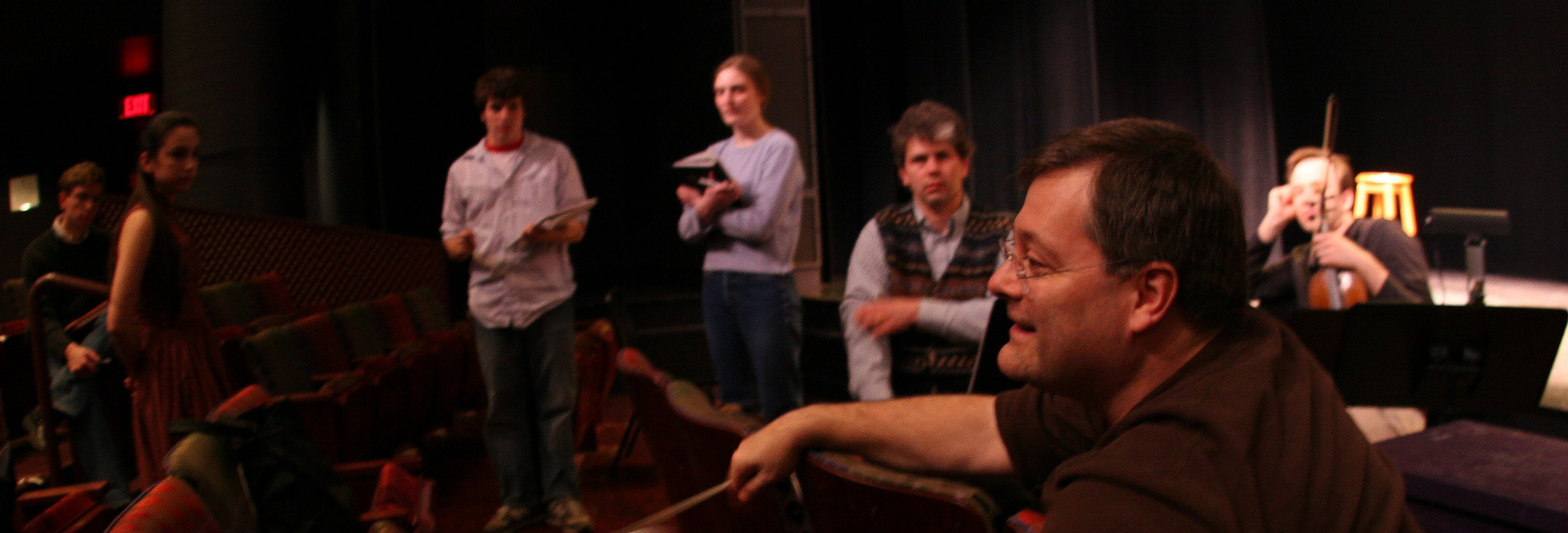
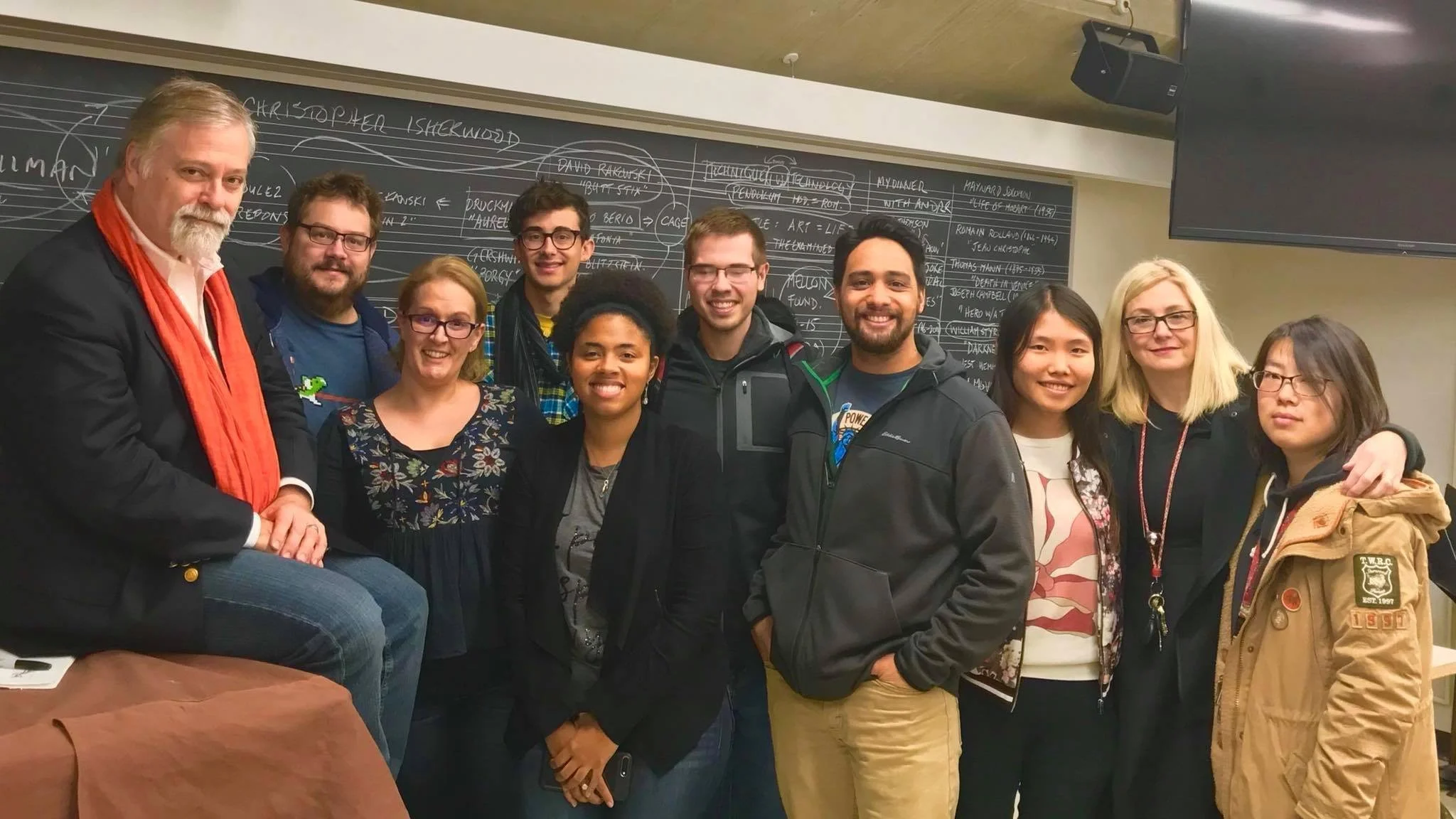
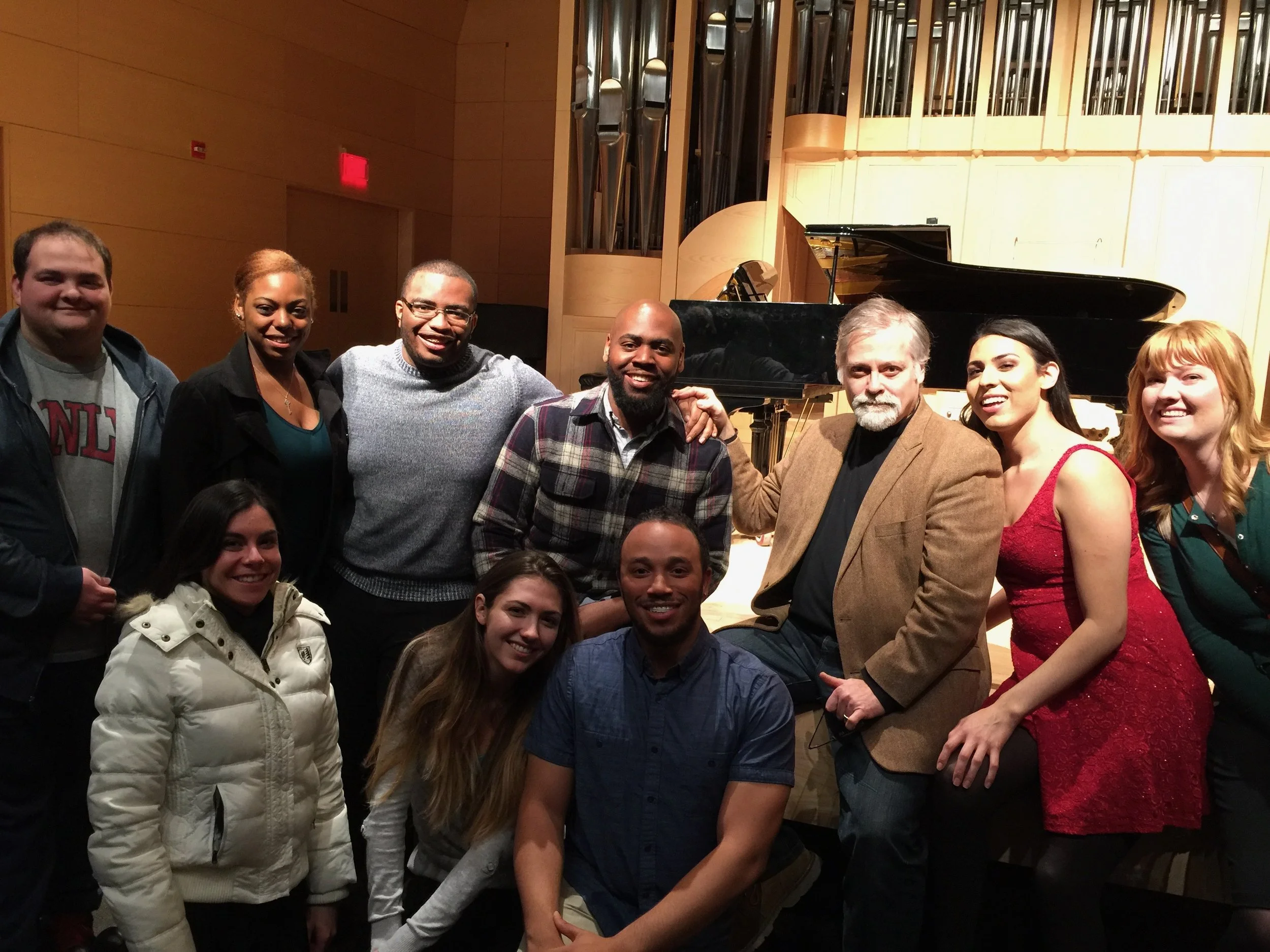
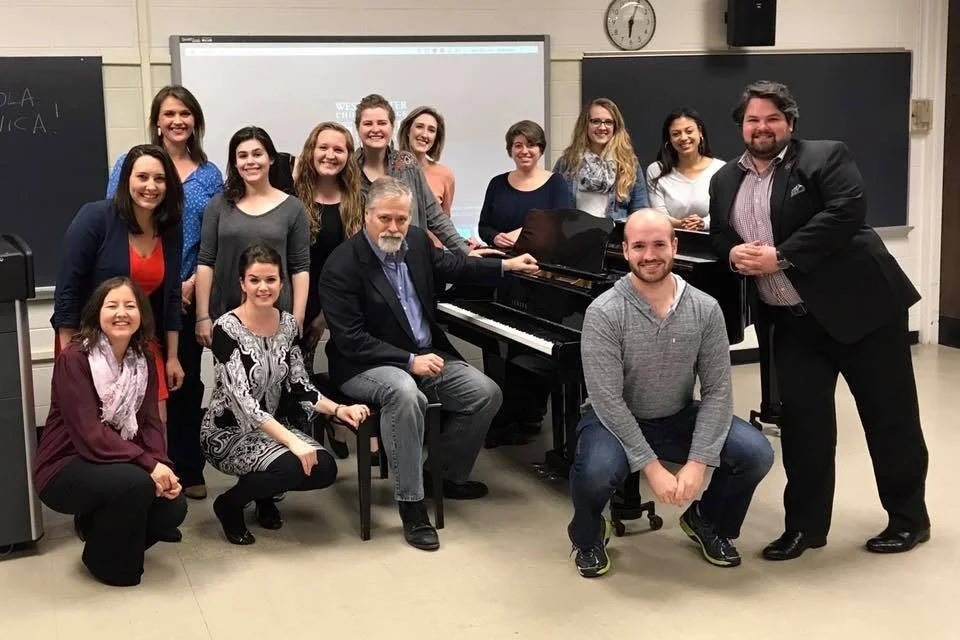
Beyond fulfilling the usual master classes, I’ve been brought in to to serve as a guest faculty at institutions like UNLV, Miami University, the Chicago College of Performing Arts, the University of Pittsburgh, and Baylor, among others. These were prestigious opportunities to coach my own music and work intensely with a cadre of young composers, unencumbered by faculty meetings and curriculum committees. In fact, I came to understand that my role was often that of a disruptor—invited to be a foil for, or an example of, a composer who views themselves first and foremost as an artist. It is a role I’ve always felt comfortable playing; being disarmingly subversive is basic stuff for a man who learned early how to charm an alcoholic parent.
During my first three years of teaching, I learned that fleshing out a student’s technique beyond their current understanding was often just a display of my own arrogance. The same applied to creating opportunities for which they weren’t yet prepared. While I never saw myself as a gatekeeper, my desire to keep the authority-versus-power dynamic “pure” often led me to over-praise mediocre work. I also mistakenly assumed students understood that my stories weren’t self-congratulatory name-drops or time-fillers, but precious oral history. Most didn’t. A couple of them did.
Body
From 2005 to 2013, I served as the artistic director and faculty chair—or perhaps “ringmaster”—of the Seasons Fall Music Festival in Yakima, Washington. It was a whirlwind: twelve faculty members overseeing three symphonic concerts, eight chamber programs, and a jazz series featuring titans like Chick Corea and Branford Marsalis. Alongside the administrative heavy lifting of fundraising and scheduling, I performed, coached chamber music, and taught composition.
Working with Pat Strosahl and Brooke Creswell, I helped build a festival ethos designed to dismantle “stylistic ghettoization.” Jazz and concert music were programmed in equal measure, with new works woven throughout. The curriculum relied on immersive partnerships; we paired each conductor with a composer for the duration of the festival, even having them room together.
Boundaries between disciplines were kept porous. Composers conducted, and conductors composed. Everyone bonded over a shared dread of early morning movement classes, dissected scores by Adams to Xenakis, Sondheim to Korngold, and attended wine tastings curated with local Yakima cheer. Whether it was the American premiere of Bernard Jacobsen’s retelling of The Soldier’s Tale or Michael Wimberly’s roof-raising percussion ensemble, the goal was a non-competitive space where creative risk was the only requirement. As critic Doug Ramsey noted in Rifftides, we weren’t just programming diversity; we were fostering a mutually supportive ecosystem.
Not all the seeds bloom. Most students eventually pursue other paths, but they leave having felt the spark of the creative process, equipped with better communication skills and an appreciation for how a problem-solver thinks. The goal is learning how to ride and guide inspiration—transforming the jangly hubbub of a beginner’s trot into the experienced artist’s blissful gallop. While academic programs have an understandable need for empirical proof (subjectively determined or not!) of intellectual credibility, to me, rubric has always taken a back seat to living an artist’s examined life. Teaching is for me the privilege and responsibility of artistic citizenship.
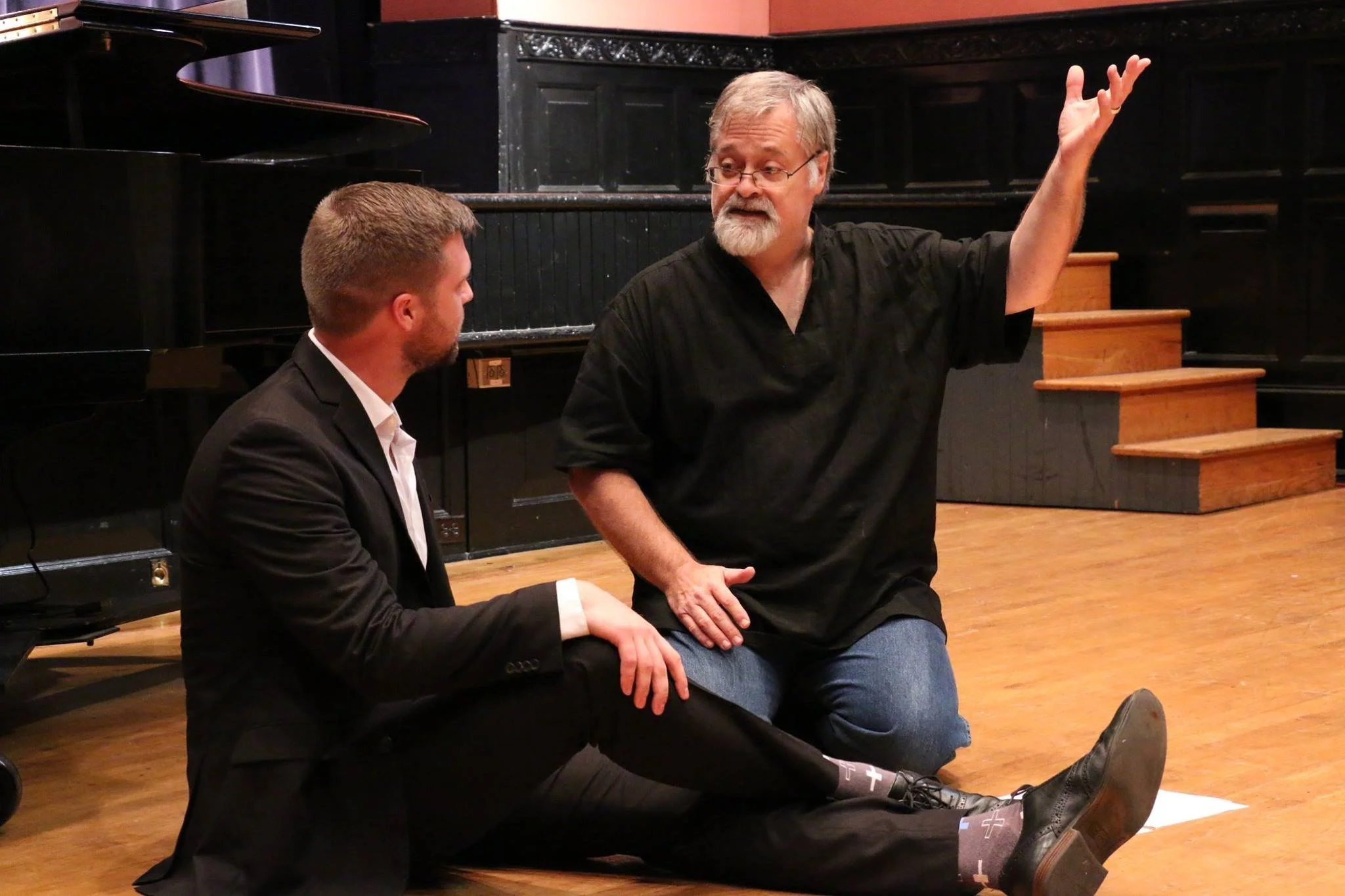
“Shame,” I told the workshop participants at the Academy of Vocal Arts in Philadelphia on a golden September afternoon in 2012, “is the nuclear reactor that powers the libretto of Pique Dame.” I paused for emphasis. “Of course, that appeals to this Lutheran boy.” After the chuckles subsided, I sang the word—Sha-a-a-m-e—shaping the air with my hands. “Life is a game. But that doesn’t mean life is light; it means games are as brutal as death.”
As I lectured, I recalled Virgil Thomson’s warning to me back in the eighties. “Marc [Blitzstein] gave lectures for money,” he had said. “You shouldn’t do it. It’s part of the ‘associated skills racket’ and too easy for a fellow with your gift of gab. You get a taste for the attention and then it’s all over.” Yet there I was, lecturing for a fifth year as a guest of the Russian Language Workshop at Ghenady Meierson’s invitation. I realized then that I was learning as much as I was teaching. Ghena hadn’t just hired me to speak; he had hired me to internalize Tchaikovsky—to grow as an opera composer through the sheer labor of earning familiarity.
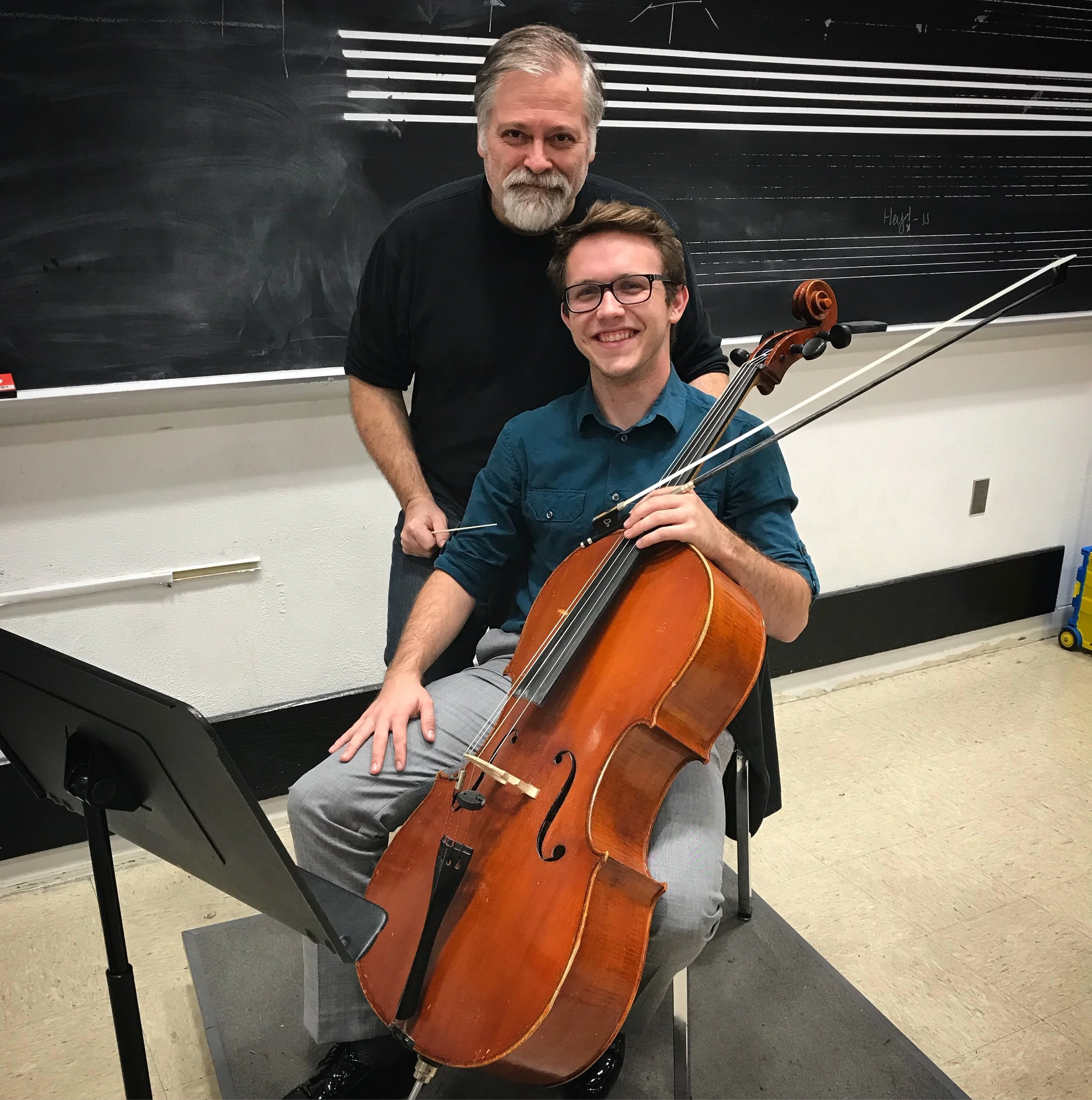
Ghena once quipped over dinner, “For someone who isn’t an ‘educator,’ you sure do teach a lot.” He was right. By the time I accepted a position at the Chicago College of Performing Arts in my fifties, I had come to accept that my most valuable role was not as a permanent fixture, but as a visiting artist strewn in the students’ path to invigorate debate, encourage critical thinking, make a bit of “good trouble,” and then—crucially—to move on, having both sown and grown.
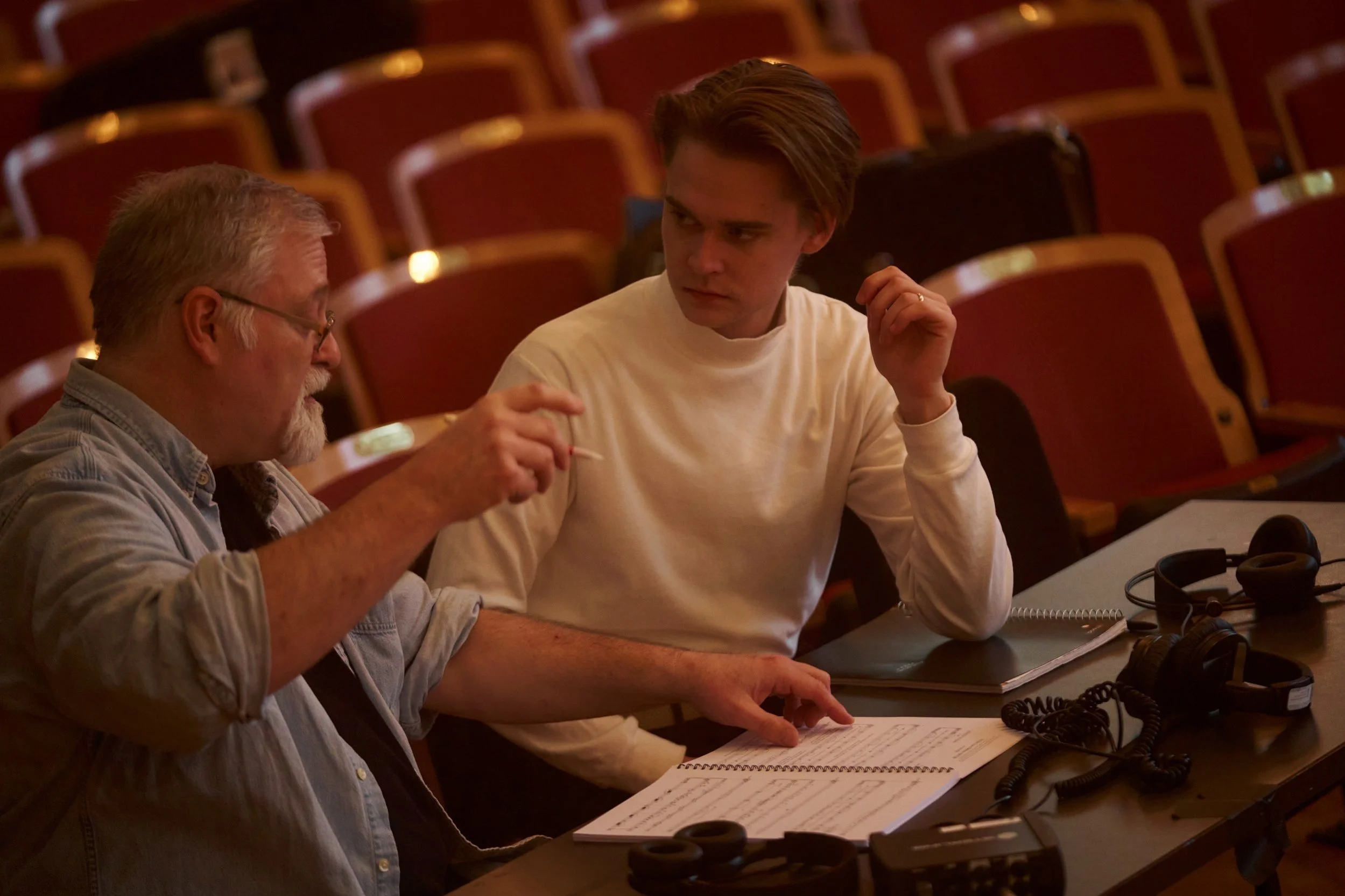
This philosophy culminated in Chicago in 2018. “But I’ve never called cues before,” my composition student whispered into her headset. It would have been easier to hire a professional, but there she was—learning like mad—perched between a professional lighting designer and a production manager in the cavernous Studebaker Theater, helping me film my operafilm, Orson Rehearsed. “You’re doing a great job,” I told her. And she was.
In that theater, the “New Mercury Collective” team and the students worked side-by-side. They weren’t just observing; they were empowered by the work itself. “Here are the tools,” I told them. “Now, make something.”
Watching them—intent faces focused on dramaturgy, digital audio, and the complex protocols of the stage—I realized I was back in the kitchen with my mother. I was “washing the dishes” again, focused on the task at hand while looking out the window at something larger. As the house lights dimmed, we were no longer in a classroom; we were reenacting the parable of the Cave, teaching and learning the basics through the shared light of the art itself.
Tail
Whether his audience was a single student or millions watching a Young People’s Concert, Leonard Bernstein could not help but teach. Oscar Levant once ungenerously called him a “great popularizer of commonly accepted truths,” but Bernstein’s generosity was a profound force for good. When he taught me, he was direct, collegial, and affectionately brutal. It was through his joyous, occasionally over-sharing love for music that I realized I, too, was a born teacher. It was Bernstein who once admonished me: “Howl like a dog if you must, because you can.”
I believe we pay a karmic debt by passing forward the oral history and personal stories of our craft. These undocumented traditions are the heritage of generations who have answered the call to serve music. I believe that with every fiber of my being.
In the late summer of 2023, at sixty-two, I stood in the Virginia night air and listened to a sound that was equal parts Dublin pub, campus protest, and primal scream. Wintergreen Music Festival director Erin Freeman was leading us all—composers, conductors, stagehands, and faculty—as we sang through the instrumental parts of Stravinsky’s Pulcinella Suite. For the students, it was a revelation; for the rest of us, it made us feel like teenagers. We were building empathy, leaning into the “howling at the moon” nature of the experience and loving it.
For the first few years after she came to us, our hound, Peanut, was silent. As she has grown older, she has found her voice. Her howl is a deep, zesty, joyous thing; she yelps at cars, postal carriers, house guests, and things unseen. After our Stravinsky “howl-fest,” as Gilda and I walked her up the mountainside toward our lodgings, Peanut cocked an ear and looked back at us with a Rita Hayworth hair-flip. It was as if she were saying, Now you two are finally onto something. I thought of Auden: “In times of joy, all of us wished we possessed a tail we could wag.” A tale we can wag.
When I was a child, my brother Kevin told me he loved opera because the singers howled their emotions with the unbridled freedom of wild animals. How to howl is something I can teach with confidence because I live it. I will not be leashed, and I certainly won’t teach anyone else how to wear one. I can, however, teach the process of becoming music—provided we understand that music is the vessel, not the final result.
An examined life is the goal; communication is the challenge; music is the howl. I have learned to modulate the amplitude of my own howl and to respect that its ferocity is not for everyone. But for the wild, joyous abandon of it, this hound howls as howl I must.