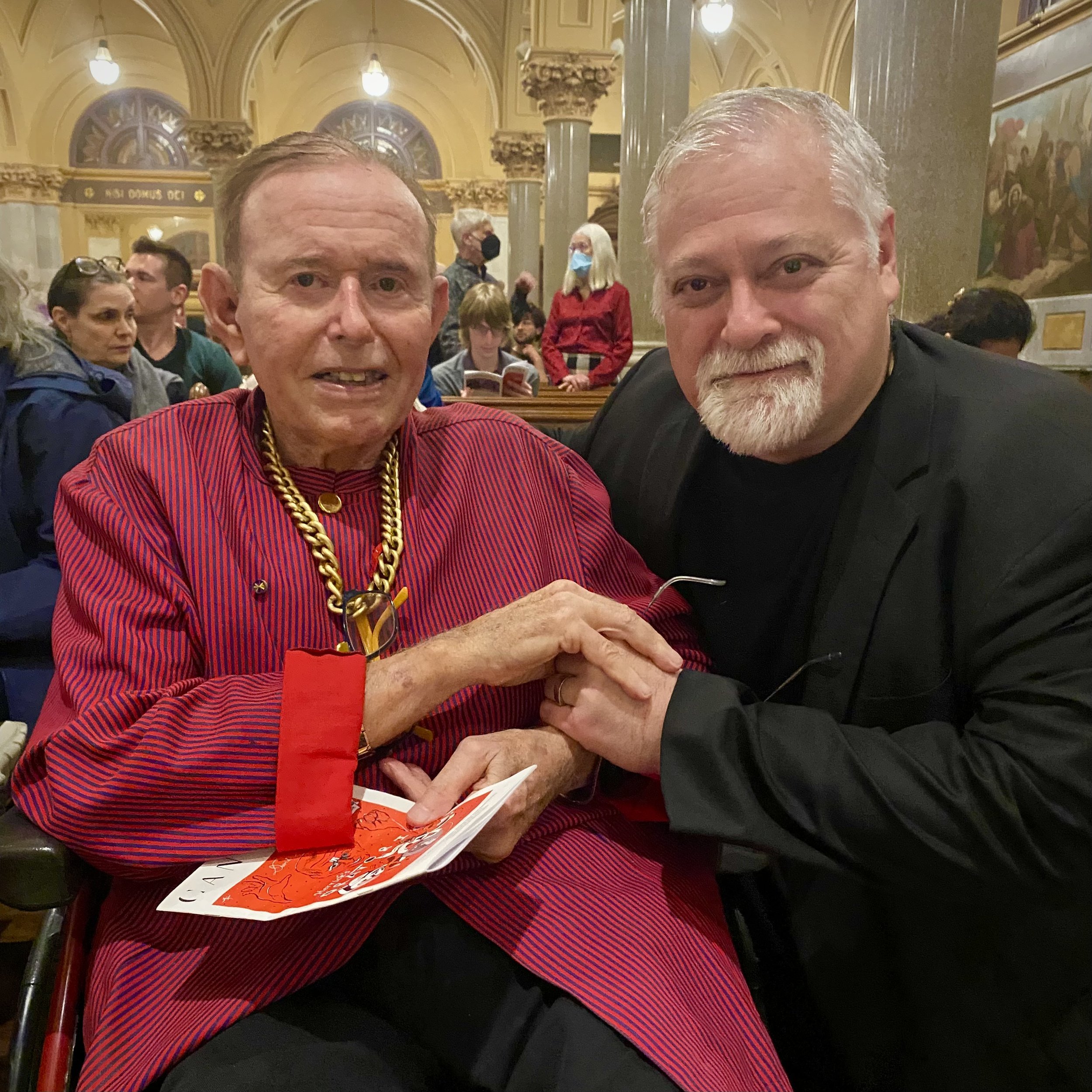
On Composing "Shining Brow"

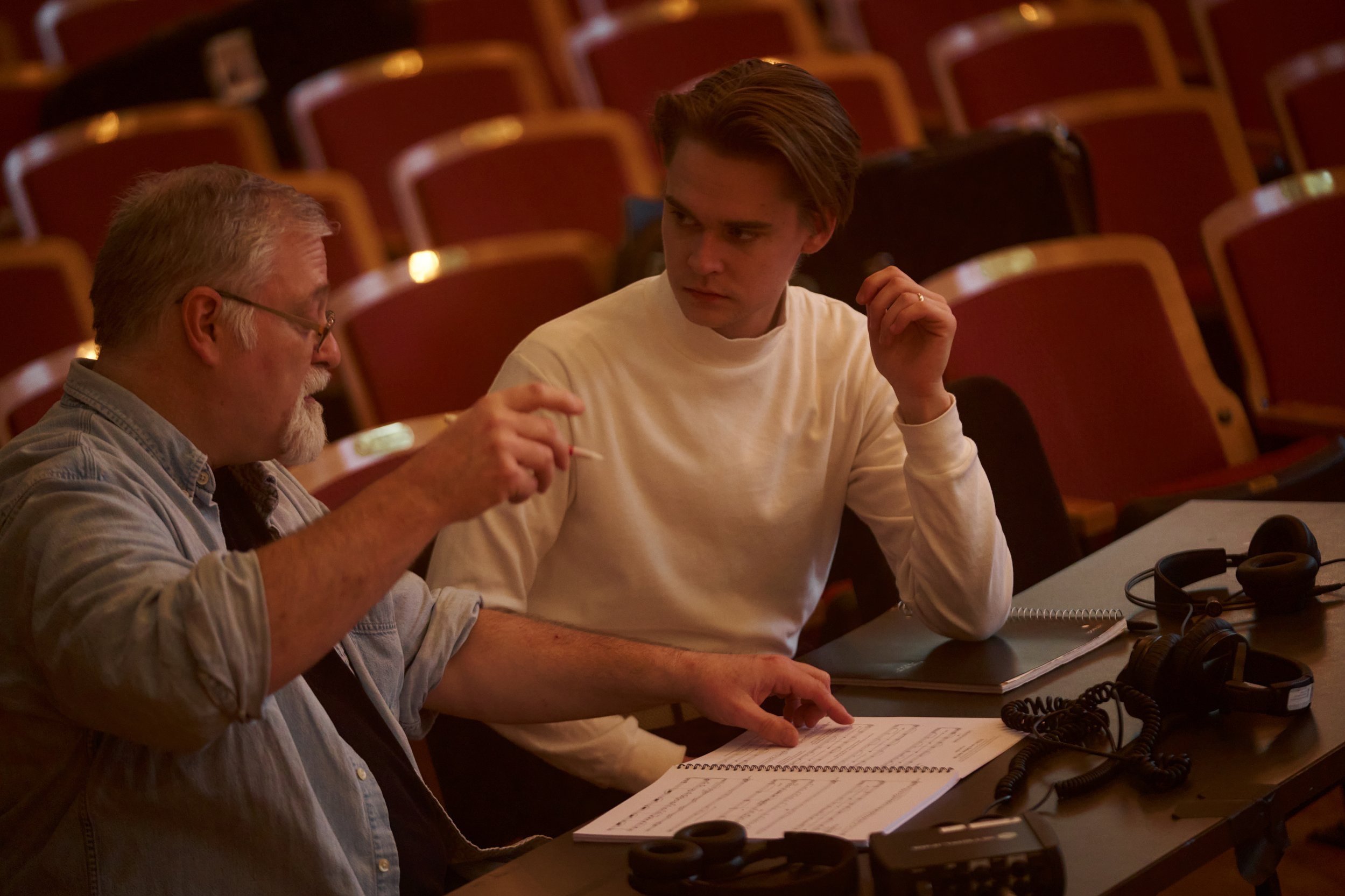
p/c: Karen Pearson

In 1989 I  began composing Shining Brow, an opera in two acts and a prologue about architect Frank Lloyd Wright. It explored the intersection of Life and Art, self-actuation and selfishness. At the time,  I asked my librettist to make this conundrum one of Wright's foremost concerns. Consequently, our Man asks a question that the actual One may never have asked himself: “Can a man be a faithful husband and father and still remain true to his art?”

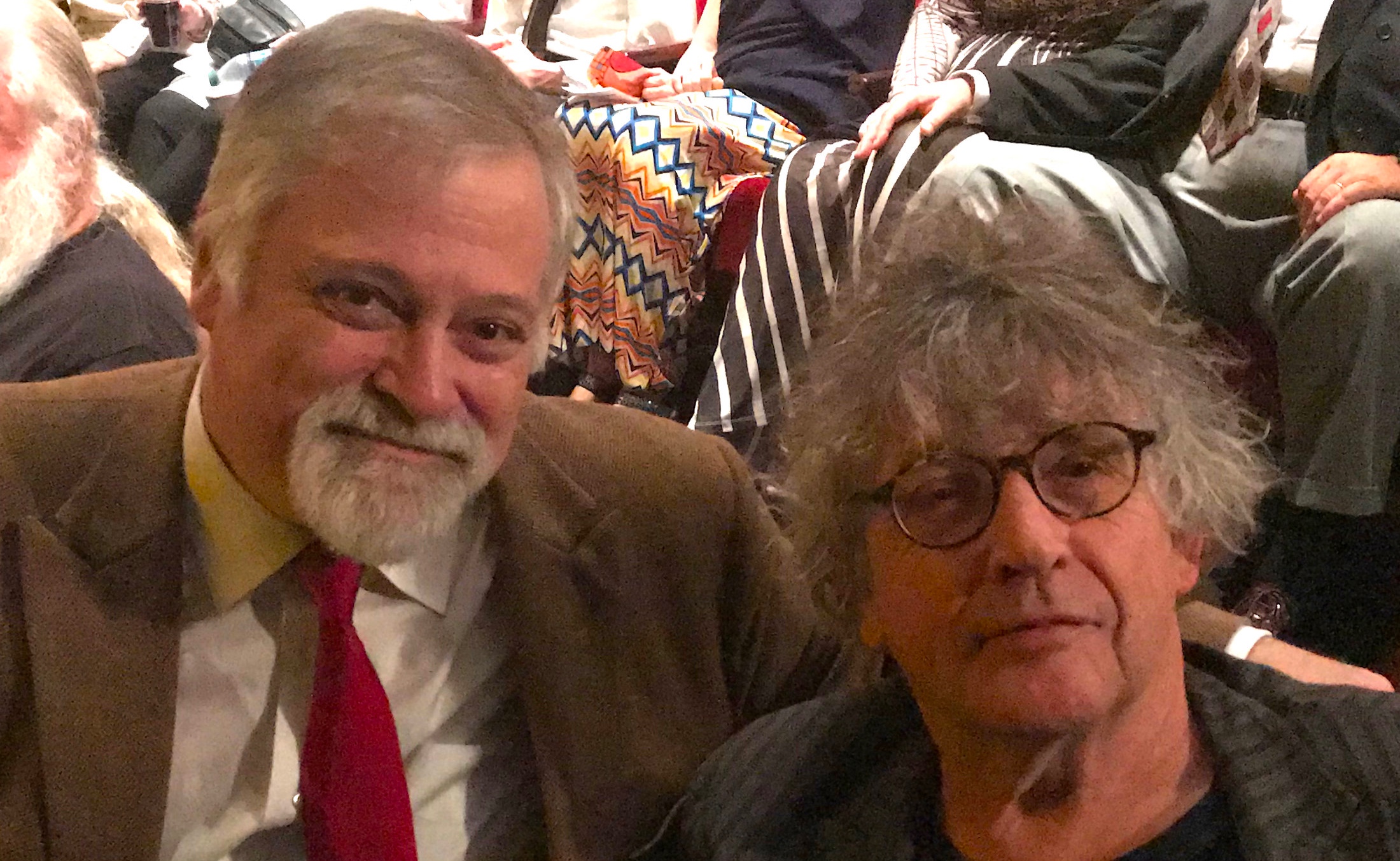
My librettist Paul Muldoon was born in 1951 in County Armagh, Northern Ireland, and educated in Armagh and at the Queen's University of Belfast. The Times Literary Supplement described him as “the most significant English-language poet born since the Second World War.” From 1973 to 1986, he worked in Belfast as a radio and television producer for the BBC. Since 1987, he has lived in the States.

Robert Orth and Brenda Harris as Wright and Mamah Cheney in a concert performance by the Buffalo Philahrmonic released by Naxos. p/c: Chris Lyons

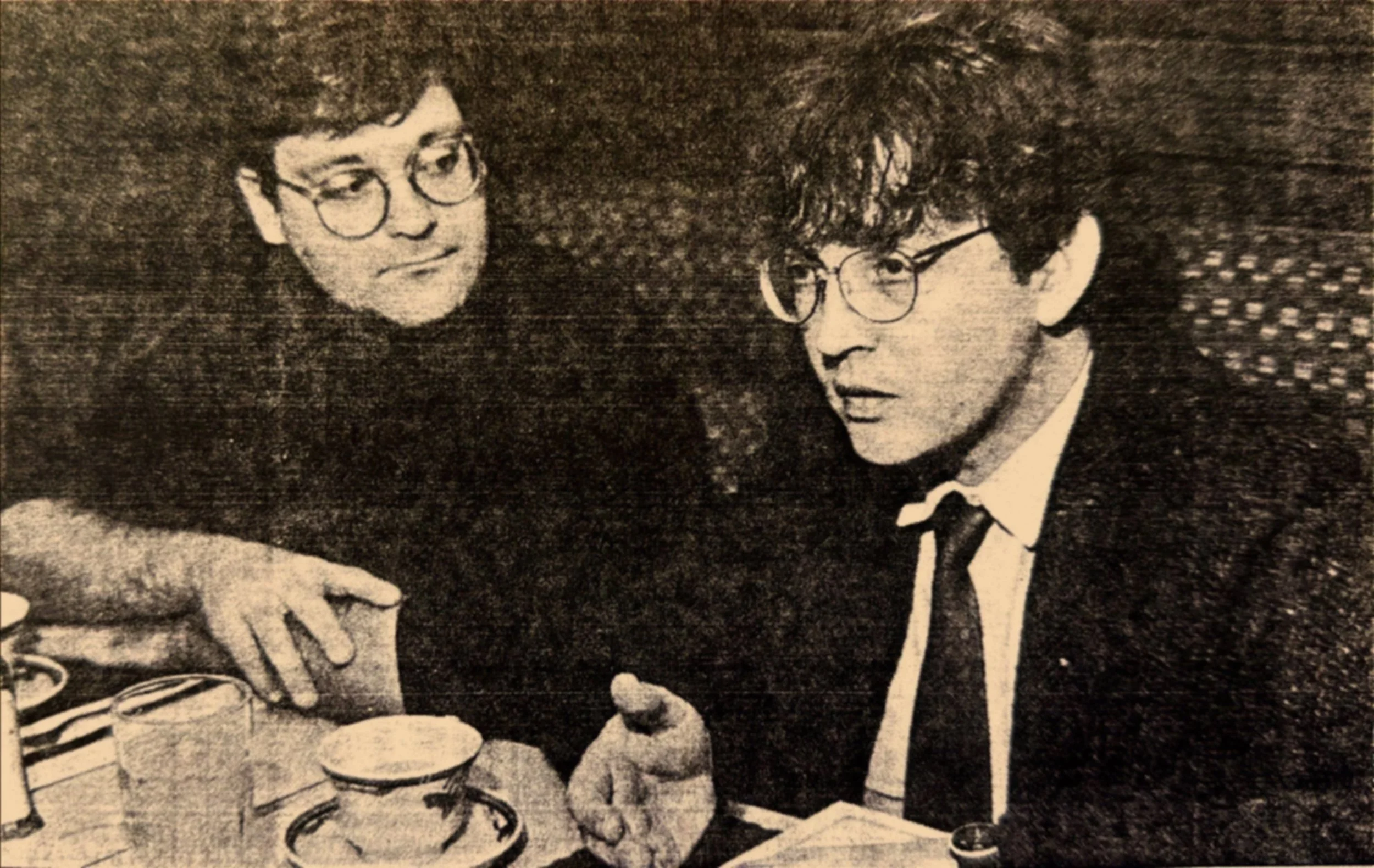
I met Paul at the Saratoga Springs artist retreat Yaddo during summer 1988. He was brilliant, ambitious, quick to skewer pretension, and impatient with mediocrity. Already it was obvious that he had every intention of becoming a celebrity poet. His hair back then looked as though it were trying to escape. He did not speak English; he produced it. You could practically hear him listening to himself as he talked. Paul was and is a virtuoso performer of his own poetry. He could read a list of names, or ingredients, and, through line readings alone, move an audience in any direction he pleased. 

In summer 1989 I received a call on one of the MacDowell Colony pay phones from conductor and artistic director of the Madison Opera Roland Johnson asking whether I might consider composing an opera about Wright. Paul was reading the newspaper a few feet away. Without thinking, I leaned out of the booth and quipped, “Say, Paul, do you want to write an opera?” A beat later, he replied, “Sure.”

When Paul and I began Brow, we first read everything we could lay hands on about Wright. We reconvened a few months later to co-author at Paul's home in Amherst, Massachusetts a filmic treatment consisting of a dozen pages describing what would happen in each scene. 

I then determined how long each scene (and each section of each scene) would last, and the sort of musical form I would use to underpin the action of that scene. Giving the outline to Paul, I asked him to create a number of core images and literary motifs that I could then graft to musical ideas, along with some “parallel” poems for related characters, so that when I shared their music, the words would be easier to adapt. At one point I needed a straightforward hymn, and he responded by creating his beautiful Goethe gloss, Hymn to Nature.

Carolann Page, creator of the role of Mamah Cheney.

Over the course of eight weeks that winter at the Virginia Center for the Creative Arts, I composed the music for the first act. I wrote the most important sections first, beginning with the last three minutes; then the music that would be associated with the four or five most important dramatic spots (what I call the “emotional nuclear reactors”) in the act; after that, I wrote the connective sections, which could and should be the least musically interesting. Each character existed in a “home” key: Wright in B-flat major; Mamah in E major; Edwin and Sullivan in A minor; Catherine in C major. The lovers’ keys were associated, of course, by the tritone, the “forbidden” interval, and the harmonic fulcrum on which modulation depends.

The most affecting, emotionally expressive tool in an opera composer’s kit is the ability to modulate. Aside from being crucial to maintaining large formal structures, it unlocks “gateways” to new emotional states and signals emotional evolution. I did not really learn how to modulate fluidly until I composed Brow, each of whose characters needed to interact with one another harmonically. I have used the modulatory practices used by Richard Strauss and Richard Wagner in their operas ever since I realized just how eloquent they really are, no matter what the surface style of the piece.

When composing opera, my compositional process has changed little since the early 80s. I retype and reformat the libretto to reflect the underlying musical form in which it will be carried, storyboard it on the wall, and illuminate it with various colored pens and pencils—say, red for one character, blue for another, orange for another; musical / poetic themes and motives that I want to “track” also get colors. Standing before the entire opera tacked up on the wall and dreaming on its entirety is as close as I’m likely ever get to understanding how a painter must feel working on a mural. A real sense of the pallet of ideas at hand is literally rendered in the colors arrayed on the storyboard.

Kevin Kees as Wright in the "Fallingwater Brow."

Once the entire opera is “on the wall” I decide what the most important dramatic moments (the “emotional nuclear reactors”) are in each scene; I specify what the climactic moment of the opera is, work downwards in triage fashion to the least important moment. I do not compose “from left to right.” I compose the music for the most important half dozen moments in the opera first. The music for the rest of the piece then spreads outwards from these key moments like concentric ripples.

Paul and I accepted an invitation from Richard (Dick) Carney, Wright protégé and then managing trustee of the Frank Lloyd Wright Foundation, to stay at Taliesin West in Scottsdale, Arizona, for a few days. After lunch with members of the Fellowship (during which Wright’s recorded lunchtime conversation from decades previous played on a boom box), Paul and I settled into the little house Wright built for his daughter. The sun set as we traded impressions and prepared for a formal dinner at which I sat beside architect and Wright protégé Wes Peters, with whom I had a long, intense conversation about Wright’s relationship with Olgivanna. “Was Mamah Cheney the love of his life?” I asked Wes. “She must have been,” he replied, “but I can only say that after her death, for the rest of his life, he never allowed her to be discussed in his presence.”

After dinner, Dick and I took a long walk in the desert and discussed the sort of opera I intended to compose. A fatherly bear of a man, he gestured to me to sit down on a boulder with him. Sighing, he said, “Well, Daron, I don’t think any of us here want you to compose a dishonest piece. Mr. Wright could be a bastard. Promise me you’ll try to convey his essential ‘greatness’ along with the rest.” I didn’t tell Dick that anybody who sings is rendered sympathetic. Instead, I shook his hand. “A promise, Dick.” He picked up some dirt and threw it. “Fine. Come and stay with us as long as you want to. Soak up the feel of the place. Make Mister Wright sing. I promise you that we’ll not stand in your way.”

Daron Hagen and Stephen Wadsworth at the premiere of "Amelia" by Seattle Opera in 2010. (Photo: Alan Alabastro)

Daron Hagen and Stephen Wadsworth at the premiere of "Amelia" by Seattle Opera in 2010. p/c: Alan Alabastro

Shortly before Christmas, I finished the vocal score of the first act. I needed a “green light” from the Madison Opera board before beginning the second. The next step was to present it to the commissioners in Madison.

“Just two hours ago,” President Bush began, “allied air forces began an attack on military targets in Iraq and Kuwait. These attacks continue as I speak. Ground forces are not engaged.” It was 16 January. The United States had just invaded Iraq. In a huge rehearsal hall customarily used for symphony rehearsals, halfway through playing and singing the first act of Brow for the members of the Taliesin Fellowship and the board of Madison Opera, conductor Roland Johnson asked me to stop at 5:45 so that we could all gather around a portable radio to listen to our President address the nation. “Tonight, as our forces fight, they and their families are in our prayers.”

"Shall we continue this another time?” I asked Ann Stanke. She looked to Dick, who asked me, “Do you have a problem with moving ahead with this presentation?” It seemed absurd to me, under the circumstances, but I needed the money, and would not get paid unless, by pulling off this presentation, I fulfilled the terms of the commissioning contract. “No,” I lied, resuming my seat at the piano and picking up where I had left off.

Dick then pledged that the Fellowship would support my creation of the opera, and Roland “green lit” my moving on to the second act. It was my first taste, at twenty-nine, of what the life of a viable opera composer might be like, and I relished it.

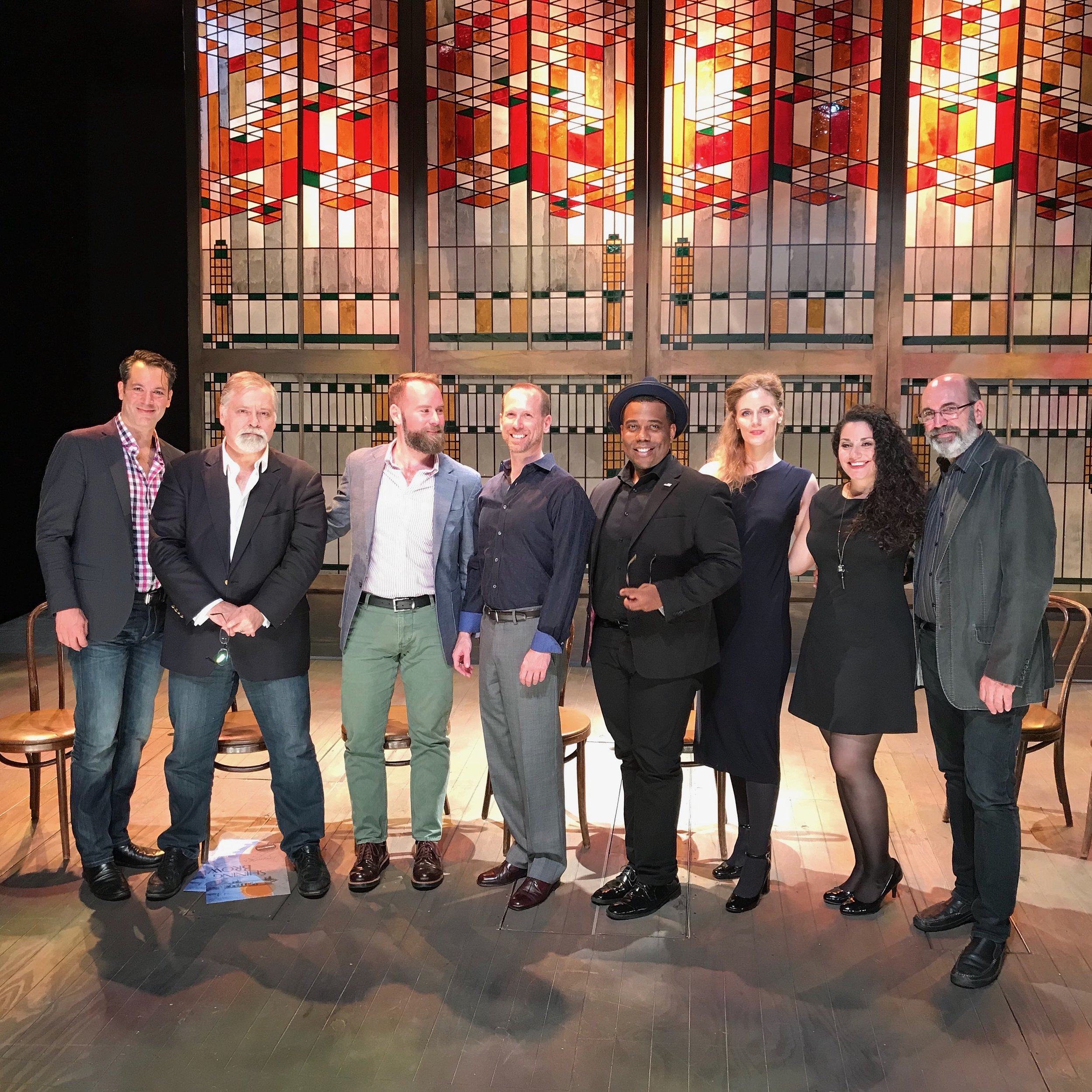
The cast and production team of Urban Arias’ chamber version, “Usonian Brow” in Washington, DC in 2017.

I spent some time at Taliesin, in Spring Green. Edgar Tafel, the best known of Wright’s disciples, decided that he was going to see to it personally that I experienced what it was like “really to live in a Wright House—to duck when you pass through doorways, discover your feet hanging over the bottom of the bed at night, feel the rooms flowing from one to the next in the dark.” He conjured for me the poetry that Wright seems to have been able to spin for clients.  His impersonations of Wright’s speaking voice were—aside from being incredibly funny—crucial to shaping my vocal characterization—particularly Wright’s stilted line readings, and what David Diamond, in a letter to me, described as “…the pontification, the affected dress-ugh-y, like Stieglitz.”

My friend photographer Pedro Guerrero’s reminiscences of Wright’s gentler moments also helped me to firm up the conviction that part of his appeal must have been the ability to project immense vulnerability in private. Dick Carney's descriptions of the tenderness that Wright could display also informed my decision to create the gentle music that underpins Wright’s soliloquies. Dick was a humane and generous man. My treasured former pupil and copyist Christopher Hume had a degenerative spinal condition that required his settling in a town with excellent medical facilities. I suggested Madison. I asked Dick to look out for Chris. He took him under his wing. They remained close for the rest of their lives.

Hagen and librettist Paul Muldoon attend the Arizona Opera revival in 2019. p/c: Stephanie Weiss

The following autumn, in a tiny efficiency apartment at the corner of Amsterdam and 74th Street just off Verdi Square on Manhattan's Upper West Side, over the course of a few months, I wrote in one long delicious stretch the second act. Darynn Zimmer, the soprano who years later recorded the role of Mona in Bandanna under my baton for Albany records, was kind enough to sing through the role of Mamah for me as I composed it.

Like baseball pitchers, most composers have rituals. Mine consisted then of making my world very small and simple when I was writing so that I could keep all of the various motives and ideas suspended in my mind. My scrupulously maintained routine began with morning coffee and a chocolate chip scone from the Korean Market just below my apartment at 303 Amsterdam while reading the New York Times seated on a particular bench in Strawberry Fields. While composing—for exactly four hours by the stopwatch—I drank two bottles of San Pellegrino. Then I would run around the Central Park reservoir (twice: 3.2 miles), and then drink a bottle of San Pellegrino afterwards while walking home. I’d devour two slices of Freddy and Pepper’s pizza (an excellent joint in the basement which is still in business) sitting in Verdi Square, and then spend the evening making a fair copy of the sketches I had made during the day.

Robert Orth as Frank Lloyd Wright in Chicago Opera Theater's revival, directed by Kenneth Cazan.

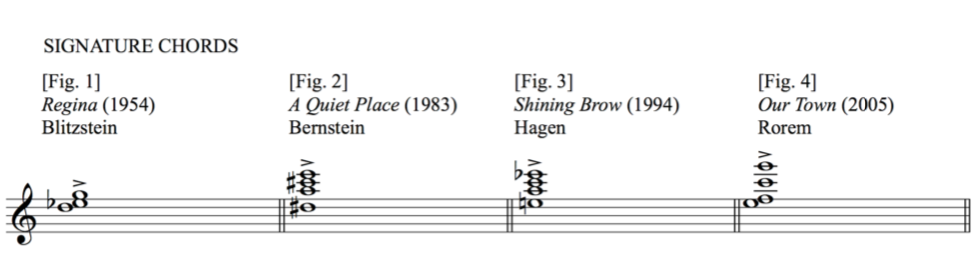
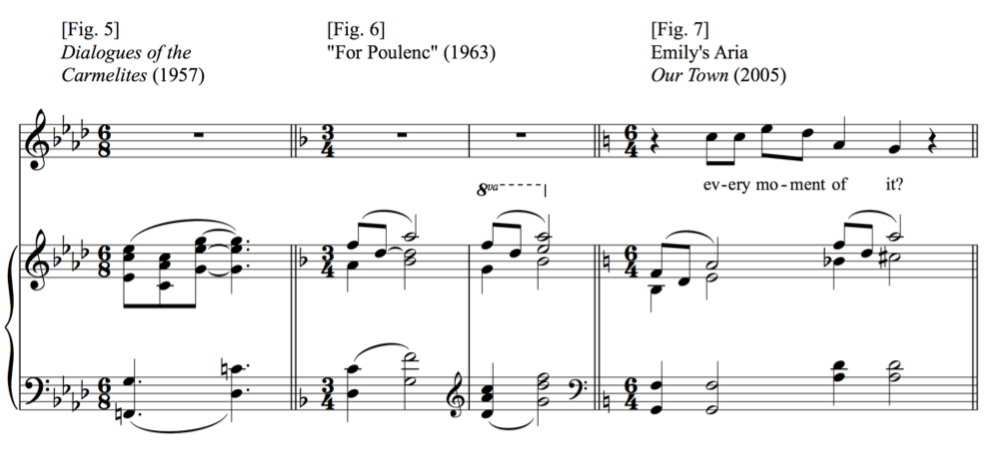
I've written elsewhere about what it was like to consult with Leonard Bernstein while I composed parts of Brow. One example of how he “got” the musical rhetoric of the opera merits repetition, I think. During Wright’s Act 1, scene one pitch to his future mistress, I quoted the New York, New York rising fourths motive that he had first used in Trouble in Tahiti, and then in On the Town, on the word, “suburbia.” Bernstein chuckled appreciatively.  “Nice lift,” he said, “very Strauss. But you followed it up with stuff that sounds like Ned’s [Ned Rorem] little Frank O’Hara opera. Did I steal that from him for Tahiti or did he steal that from me? I can’t remember. In any event, I know you’re talking about theft by putting stolen music in his mouth, so you should come up with something else there.”

Tim Petty as Wright in the Tulsa Opera revival.

At some point, I pointed out that I had been modeling the character of Wright musically on him, and the relationship between Wright and Sullivan on him and Blitzstein. He got it: “That’s Maria. No, it’s the orchestral play-in to the first scene of Marc’s Regina,” he mused aloud. “Well, yes, I stole it from Marc.” Silence. Sudden grin: “But he stole it from Aaron!”

The Madison Opera had asked me to suggest a stage director for Brow. I asked Bernstein to suggest one. He suggested Stephen Wadsworth, with whom he had just written an opera called A Quiet Place.

The Fallingwater premeire by Opera Festival of Pittsburgh in 2013.

“I’ve written an opera about Frank Lloyd Wright,” I told Stephen on the phone. “I’m looking for someone to bring it to life on the stage. Lenny says that you’re that person. Would you like to come over for coffee and talk about it?” I knew that would get his attention.

That April, we sat cross-legged on the floor of my tiny studio more or less under the piano and in front of the six linear feet of opera scores on the bookshelves and began sounding one another out by pulling scores at random from the shelf and discussing them.

It helped that we both had been compelled to figure out how to work with Bernstein—Stephen as collaborator, me as pupil. Stephen could survive (even enjoy) Bernstein's intellectual death marches; I thrived on his musical pop quizzes. We shared an appetite for conversations that functioned on multiple levels.

Michael Sokol as Wright in the 1993 Madison Opera production.

Michael Sokol as Wright in the 1993 Madison Opera production.

I know now that our first meeting was typical of Stephen’s special way with everyone—warm, clever, completely at ease, and intellectually competitive. His probing eyes habitually sought out mine; his compassionate face was extraordinarily expressive. His long fingers moved restlessly when he spoke. I found charming his ability to italicize what he was saying by giving you a hard, quick stare, and then releasing you. He was fun.

At first, it was the confidence and maturity of his opinions as we stuck our thumbs into scores and played “what’s the most important moment in this scene” that impressed me most. In time, as we grew to know one another better, I realized that what I had interpreted as competitiveness was instead an urgent desire to understand: if an idea intrigued him, he reflexively craved an explanation.

The talents that have served him so well in his illustrious career were already in full play as, over the course of six very long work sessions at the apartment in the Village he shared with baritone Kurt Ollmann, I played and sang through Brow’s score. I was defensive, and needed to be “sold” on every one of the dozen or so alterations to words and music (I had to my mind “finished” the score months previously) that he suggested. I’m not certain now why I fought him so hard—especially since I knew even then that his criticisms were always spot on. Possibly, it was because I wanted to see just how right he thought he was.

For the workshop, the cast and company of Brow gathered at the Bernstein family’s apartment at the Dakota to give for Madison Opera’s donors and staff a workshop performance (piano and two dozen singers) of the complete score. Ann Stanke, The company's founde and the driving force behind the commission, worked the room as Roland powwowed with the singers.

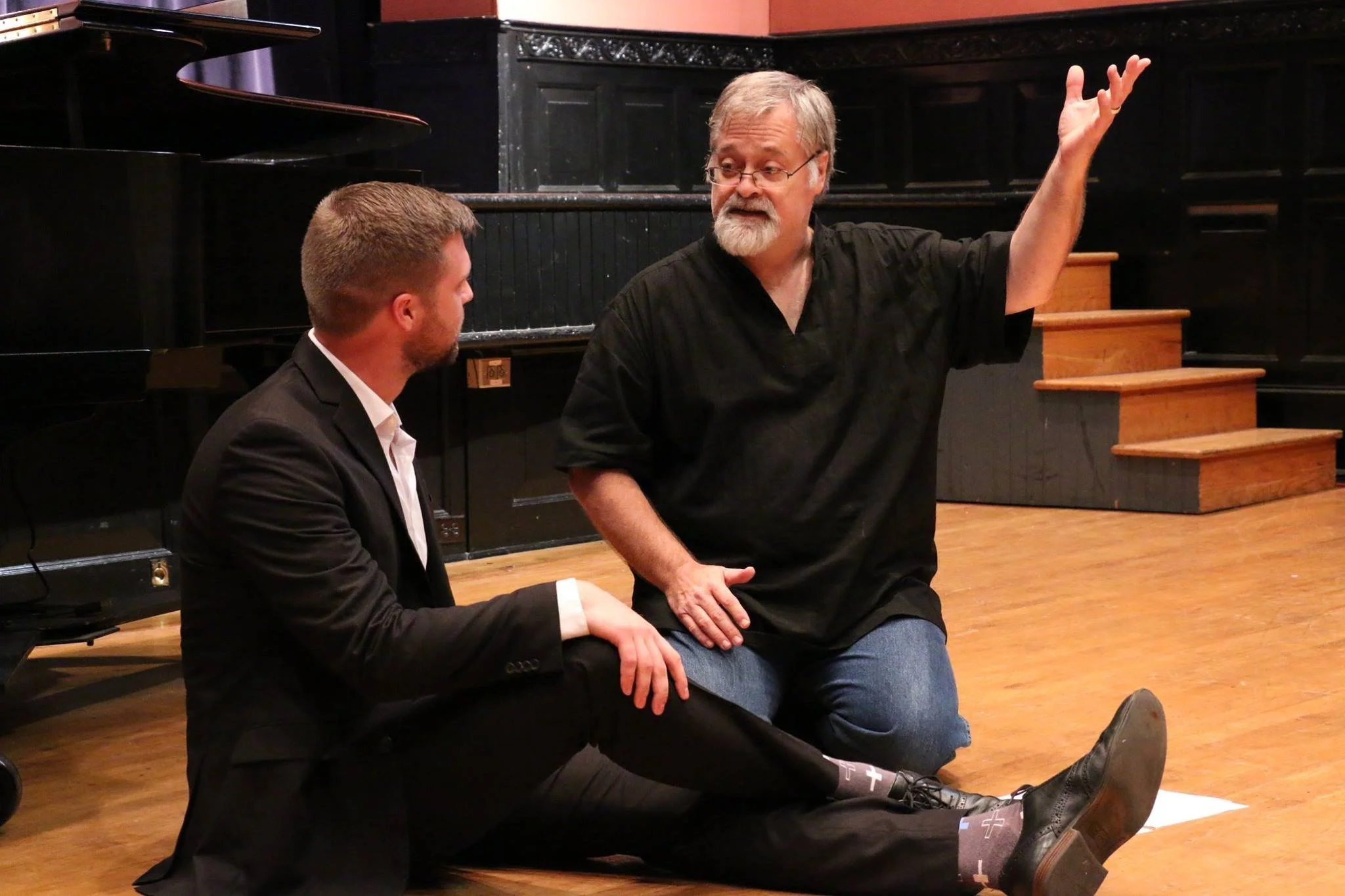
Daron and Arizona Opera revival director Chas Rader Shieber in 1993. p/c: Stephanie Weiss

At my suggestion, the company had capitalized upon the New York press’ interest in visiting the apartment one more time to fill the room with eyes and ears (particularly the national press) that might not otherwise have had any interest in a commission, however laudable, of an unknown composer by a small Midwestern company.

The boundary between life and death blurred in a familiar—even comforting—fashion as I listened to the music I had provided for the character of Wright—consciously referring as it did to Bernstein’s music at key points—was performed in Bernstein’s home. It had been impossible, strolling around Taliesin with Dick (like me, an insomniac) in the wee hours, not to feel Wright’s presence. It had been impossible at Yaddo not to feel the Trask family’s. It had been impossible to walk through the Common Room at the Curtis Institute as a student without feeling the benevolent spirit of Mary Louise Curtis Bok. And it still felt, at the Dakota, as though Bernstein slouched still in the chair in the den, sipping a scotch, pulling on his plastic cigarette holder, growling one of the last things he said to me: “Play and sing that part again, baby—the part that sounds like Marc.”

Everyone involved with the April 1993 opening night of Brow knew that it was going to be a success. 25 years and 7 operas later, I now am acutely aware of how rare that is. That night, at “the rail” of the house, behind the audience, where authors traditionally are allowed to pace, fret, enjoy, and suffer, performances of their work, with Stephen, as the tragic ending of Madison Opera’s première production unfolded.

Frank Lloyd Wright’s final aria. Arizona Opera 2019 revival.

Stephen said, “Look!” “Eh?” I said. “Look at them,” he said, sweeping a hand over the audience, who were experiencing the last few minutes of the opera. “They’re all weeping.”

“Yes, that’s where we want them,” I said. “No,” he said. “That’s where they want to be. You did it. I did it. Paul did it. The performers did it. Communion. We all did it. Together.”

The next morning a telegram from Ned arrived at my hotel, saying, “I always said that you would arrive at twenty.” The reviews were strong, and the consensus was that my career had begun.

"Can a man be a faithful husband and father and still be true to his Art?” In the years since I've come to my own conclusion about the Life vs Art paradigm. Art is to my Life as the MacGuffin is to a Hitchcock movie. While I have become music, my family is my Life. So much so, that I've experienced a parting of ways with most of my colleagues who’ve concluded otherwise. Perhaps Wright came to that conclusion sometime after the point at which our opera left him, pledging to rebuild Taliesin in Mamah Cheney’s memory. Perhaps not. In the long run, it shall probably only have mattered  to the people he loved and who loved him. 

First published in the Huffington Post on 8 August 2016. Read it there by clicking here.

On Burt Bacharach (1928-2023)

ABC Television, Public domain, via Wikimedia Commons

ABC Television, Public domain, via Wikimedia Commons

The bit was in. I had spotted bliss—far off in the distance still, but real enough to enthrall. Fifteen years old, summer of 1976, body vibrating, ablaze with youth and hormones at the kitchen table at three in the morning with the radio on listening to Ron Cuzner’s overnight jazz show on WFMR and copying parts to Together, the musical I was writing for my friends.

Cuzner introduced the six-minute-long 1971 Polydor recording to his listeners as though disclosing classified information over whisky to a fellow agent in a smoky bar near Checkpoint Charlie. I remember the words clearly: “He hails from California. (beat of silence) Marlene Dietrich (again, the silence, to let the enormously important intelligence land) is reported to have (beat) loved him. He married a glamorous movie star (beat), Angie Dickinson. But he was a student of Milhaud, and Cowell (I knew who these guys were and was impressed) who, shall we say, went off the railswith the likes of (he paused, as though about to invoke a Holy Trinity) Warwick, Jones, and Alpert. This (Cuzner’s ultimate seal of approval) very cool orchestral work describes the moment you first see (long beat) her.”

Five years earlier, my brother Kevin had brought the Columbia LP’s of Leonard Bernstein’s MASS home and I had scandalized my fellow ten-year-olds by playing “it was goddamn good” (listen to Alan Titus sing it here) in class at Linfield School to the horror of Principal Buege (pronounced “Biggy,” of course) and to the delight of my mother. (Kevin had provoked similar outrage by bringing Jesus Christ Superstar to school a year earlier.) But my mom also adored Ella Fitzgerald, Barbara Streisand, and Frank Sinatra—the exquisite Nelson Riddle arrangements of the Cole Porter songbook especially. I was immersed in the Beatles songbook, of course; I had read Twilight of the Gods, Wilfred Mellers’ terrific book about their songs, the previous summer. My brothers and I had wept in 1970 when the announcer introduced the first local broadcast of The Long and Winding Road on WOKY by revealing that the Beatles had decided to split up.

Intuiting that something interesting was about to happen, I slipped a cassette in to tape it, missing the first few bars. I would listen to that recording of And the People Were With Her a hundred times that summer. I still have it.

My literature teacher, Diane Doerfler, knew that the one thing I was sure I was going to do was leave Wisconsin for the coast at the very first opportunity. Which coast was very much up in the air. My father favored the west coast: he recorded movie soundtracks by way of a jack he had installed on the back of our television. I’d spent a lot of time listening to dozens of them—particularly to Elmer Bernstein’s majestic Great Escape, Magnificent Seven, and To Kill a Mockingbird. Doerfler was in favor of the east coast: she had tossed me a copy (which I still have) of John Cheever’s collected short stories about life in the Hudson Valley and quipped, “Here. Read these. They will help.” (They did. Doerf was right; after decades in Manhattan, I now live in the Hudson Valley.)

From the moment that And the People Were With Her (listen here as you read this piece) ended, my “Killer B’s” for the rest of summer 1975 became Beatles, Bernstein, and Bacharach and the west coast became a real contender. John Williams’ pealing orchestral main title to Star Wars in summer 1978 hit me like a hammer, and I was certain — according to my diaries — that I would move to Los Angeles and start work as an orchestrator, perhaps even graduate in time to scoring. The decision was made when mother sent my orchestral Suite for a Lonely City to Helen Coates and in return received a letter — a sort of unexpected musical golden ticket — from Leonard Bernstein which she would open a few feet away from where I was sitting. East it was.

In a few months, Kevin would put Britten’s Billy Budd on the record player, and my future as an opera composer would be set: Bacharach was supplanted by Britten. By the time I graduated high school, the earthy authenticity of Bartok supplanted the Beatles. College in Madison brought Homer Lambrecht’s influence; he introduced me to the Italianate suavity of Berio, and my musical trinity became Berio, Britten, and Bernstein. When I finally landed at Curtis, Lukas Foss got me into Stockhausen — a needed antidote to the polishing and professionalizing I was receiving in my lessons with Ned Rorem — and my world was turned inside out. I dedicated myself to Beethoven, Brahms, and Bach as far as the school and my peers were concerned — heaven knows I had enough to learn about that repertoire! — and holed up at the Free Library with Stockhausen and the eastern bloc modernists in the afternoons. Though I toyed with a career in LA during summer 1988, I ended up moving to Europe instead, returning to New York City for good in 1990.

Being a pianist and devotee of the American Songbook helps one to truly credit the subversive power of Bacharach’s music. Gershwin, Arlen, Kern, Rogers, Porter — the lot of them — were only a few years past. Like Bernstein, Bacharach’s chord choices could be deliciously “classical” (I hear the harmonic choices of Bill Evans), with modulations, shifting meters and phrase lengths. Some of his bridges (my favorite is the wandering and wonderful, take-that-Kern-and-Arlen bridge to A House is Not a Home — listen here) are pure bliss. Like Stephen Sondheim and Bernstein, his tunes could be tricky. But during his Warwick-Alpert years, I sense that something in him led him to craft surprisingly memorable (though, again, deceptively simple yet more than quirky and smart, I’d say inspired) tunes.

I have read that Bacharach will be remembered compositionally as a transitional figure bridging the methods perfected by the 50s Brill Building bunch and rock and roll. Or maybe as the American Michel Legrand. Maybe, but I think that takeaway unfairly diminishes his accomplishment. He was a master of instrumental MOR. (“Middle-of-the-road,” a commercial radio format that includes “easy listening” and can even cover cool genres such as Shibuya-kei and show tunes and not so cool ones like Countrypolitan.) MOR makes musical snobs crazy—particularly when a gifted composer writes it. I love that. It’s subversive, and musical chauvinists just don’t get it.

Bacharach brilliantly subverted commercial music clichés and practices by marrying them (thereby freshening classical tropes and supercharging pop music tropes) to classical chops and compositional procedures not to accompany the dissipation of the valium and martini hazed Greatest Generation, but to underline their societal disillusionment. When James Coburn steps into William Daniels’ den (watch it here) in The President’s Analyst (1967) and Daniels’ character (a gun-toting “liberal”) flicks a switch, filling the room with “total sound,” the music supplied by Lalo Schifrin captured the essence of what I have described elsewhere as that which is “heard in the waiting room of a dentist’s office while awaiting a root canal.” It’s MOR, it’s the seamy underside of the American Dream, and it is glorious.

When Cory, a 35 year old arbitrageur who works at the World Trade Center, arrives and lets rip with a big aria in my operafilm 9/10: Love Before the Fall, he’s characterized by the sort of virile Mike Post television theme (here, or here, or here) from the 70s-90s he’d have grown up with—who knows, maybe watching LA Law as a teenager was what inspired him to become a lawyer! When Bibi, a 21-year-old singer brought up in Los Angeles, remembers her childhood there, she swings into music that could have been lifted wholesale from Nikki (listen here). MOR had served as the background music to their suburban childhoods as much as shag carpeting had comforted their bare feet in the den—one on the east coast, the other on the west. It is my honor to characterize them with the music with which they would have identified. Editing the film, I’ve watched again and again (as only one strapped to a moviola must) as people in the room reacted with everything from delight to contempt to these musical moments, depending on who they think they are or what they think music ought to be.

Bacharach was who he was, and his honor — whether it be in South American Getaway (listen here, where he out swingles the Swingle Singers and puts a pin in Berio’s magnificent Sinfonia), or Pacific Coast Highway (listen here, from 1968) in which he captures the dread-filled determination to be carefree that I still picked up on while driving on it during the 90s to Stinson Beach — was to contextualize his time.

To me, though, the most incorruptible facet of Bacharach’s compositional gift remains the gleaming horizontality of his melodies from which the chords seem to hang like icicles from the eaves of an irregular roofline. Hal David’s lyrics were middlebrow — another thing that made the songs easier to digest than Sondheim’s — but heartfelt and soulful. I was never crazy for the collaborations with Bayer Sager. Elvis Costello’s verse — smart, dark, and probing, was a great foil for the late Bacharach as a songwriter. Bacharach set lyrics as an art song composer would poetry (or as Elton John treats Bernie Taupin’s words, though he is liable to override the lyrics entirely for the sake of a good hook or tune) — permitting the rhythm of the unevenly proportioned lyric lines to generate melodies more like those from an art song than a popular song.

Perhaps, if he had been the sort of man who could have been contained by the eastern seaboard, he would not have toured with Dietrich, courted commercial success, or married Dickinson, or encountered his singer muse Warwick (his Leontyne?) and created I Say a Little Prayer (listen here to it as not just a love confection but as the cri de coeur of a woman whose boyfriend is in Vietnam and you get how his songs can be simultaneously winsome and wise) and a host of other great Motown-influenced gems. Maybe he would have surpassed Alec Wilder’s expectations and created a new American art song repertoire. Maybe he would have been America’s other Samuel Barber. Maybe he did. Maybe he was.

On Gian Carlo Menotti (1911-2007)

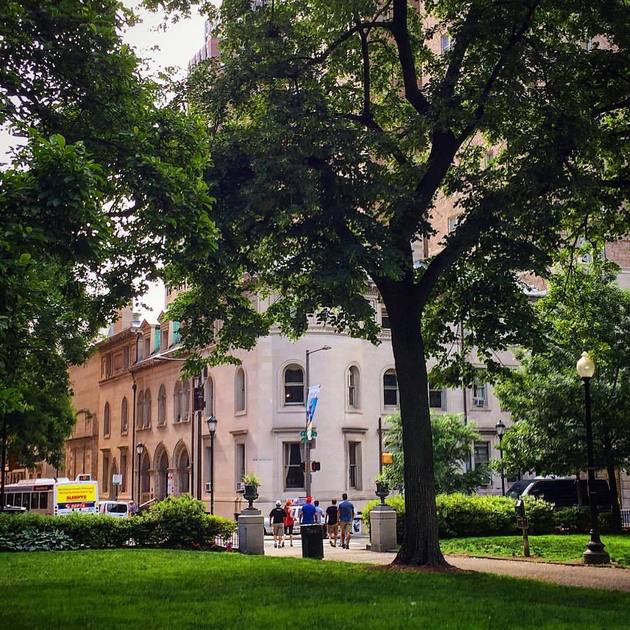
The Curtis Institute of Music, where Gian Carlo Menotti met Samuel Barber, ultimately joined the faculty, and where Daron Hagen went to school.

The Curtis Institute of Music, where Gian Carlo Menotti met Samuel Barber, ultimately joined the faculty, and where Daron Hagen went to school.

Gian Carlo Menotti’s operas were awarded not one, but two Pulitzer Prizes—the first for The Consuland the second for The Saint of Bleecker Street—in the 50s, when the award meant very different things than it does today. An Italian by birth who, despite retaining his Italian citizenship, proudly referred to himself as an American composer, he wrote for NBC the infectious Christmas opera Amahl and the Night Visitors, along with two-dozen other operas.

The attitude most “serious” musicians have towards Menotti’s music is neatly summed up by an exchange I spotted on a colleague’s Facebook wall this morning: “You’ve never seen my eyes roll more than when I had to, under contract, conduct that miserable Amahl,” wrote one person. The next comment in the thread offered a very, very dry response: “Well, Amahl is, for better or worse, in the repertoire, and you were paid, weren’t you?”

The Medium was the first opera I saw live. Milwaukee’s Florentine Opera sent its young artists out in a touring production to junior high schools. It was evident to me even at the age of fifteen that the money had been drummed up to bring them by my fearsome chorus teacher and guru, Wally Tomchek. The performance, on the school stage before the entire student body, was riveting. To this day I remember the haunting refrain, and the music to which it is pinned: “Toby, Toby, are you there?” A composer who can manage that feat deserves complete respect.

In fall 1981, fresh from Wisconsin, I began the happiest six months of my youth. My elation, following acceptance to the prestigious Curtis Institute of Music to study composition with Ned Rorem, was generated by the wild knowledge that my childhood dreams were in fact coming true, that the sky was the limit. I possessed the nascent understanding that, with unstinting hard work and commitment, anything was possible. It was incredible; an Icarus-like high that, being my father’s son, carried with it a specific sort of dread that the bottom was going to fall out, and that everything would turn to bad—which it did, twelve months later, when I cradled my mother’s head in my arms as she succumbed to cancer.

That winter, Curtis invited Gian Carlo Menotti to come for a few weeks. During his time in Philadelphia, he coached performances of his music, attended a concert of his orchestral works (including the hauntingly beautiful ballet score Sebastian), and gave my best friend Norman Stumpf, me, and Robert Convery composition lessons. Norman and I took Gian Carlo to lunch at the once magnificent, still dustily opulent Barclay Hotel, then home to Philadelphia Orchestra music director Eugene Ormandy and his wife. The almond-mauve, curtained dining room was appointed like an interior from Visconti’s film of Death in Venice crossed with the funeral parlor in Tony Richardson’s film of The Loved One. “So what would you like to know?” Gian Carlo Menotti asked, taking a seat and wiping his lips delicately with a napkin.

“Opera,” Norman said, “we’ve got to talk about opera.” “Right,” I agreed. “Why don’t we talk about la parola scenica?” I asked. “Ah,” Gian Carlo smoothed the tablecloth with his long fingers as though creating a space, “you are referring to Verdi’s phrase—well, let me tell you….” He began with Verdi, pinpointing the key phrase of music in his favorite scenes; then he moved on to Richard Strauss. His description of collaboration was trenchant: “A stage director looks at a scene one way,” he began. “The composer looks at the scene in another way. The librettist sees it a third way. The composer must craft a scene so clear in intent that all three are compelled to agree.” 

Dessert demolished, coffee drunk, Gian Carlo called for fruit. Eyes twinkling, he said, “Boys, I know that you invited me to lunch. But this is my hotel, and I have already told them to charge it to my room.” He raised his hand peremptorily. “Don’t spend your money on an old man; spend it on something fun.”

After making us promise to remain in touch, he rose gracefully from his chair and glided out of the dining room. Deprived of his gravity and glamour, we felt like men in a lingerie shop, surrounded by elderly Ladies Who Lunch poking at their salads and stout executives tucking into their steaks. I slipped a pear into my jacket pocket on our way out. Walking down Locust Street, Norman and I were pleased to have unanticipated mad money in our pockets.

Literally skipping down the sidewalk, I began, “I feel…” and Norman continued, “…As though the world…” patting first his tummy and then his wallet. “…Is our Oistrakh,” I completed.

Five years later, in lieu of enrolling in Arnold Arnstein’s hand music copying course at Juilliard (on to which I had moved after graduating from Curtis), I agreed to join his team of union copyists in preparing the performance parts for Gian Carlo’s Goya —his final, giovane scuola-style opera and, in the event, a star vehicle for the great tenor Placido Domingo. It was a harried, hair-raising project: music sometimes arrived from Gian Carlo on the day that a scene was scheduled for rehearsal. In November I travelled to Washington to attend the world premiere.

Scarcely a soul argues that most of Menotti’s later musical work (his libretto for Samuel Barber’s Vanessa is the equal of Onegin’s, in my opinion) was substandard, but New York Times music critic Donal Henahan’s astonishing cruelty in describing Goya as “a rather stupefying exercise in banality ... a parody of a Menotti opera” was, even then, so brutal that it shocked people. At the time, I found the review (slipping the word “rather” in like a shiv before the word “stupefying,” as though Menotti had failed even at being entirely stupefying) insolent. But I was still too young to understand how profoundly disrespectful Henahan was being, and how wounded to the core—after two-dozen operas and a lifetime of service to his art—Gian Carlo really was.

The pain in his voice on the telephone when I reached him at his hotel the morning it ran in the newspaper was heartbreaking. “He’s just a critic. You’re Gian Carlo Menotti,” I sputtered uselessly, unable to believe that somebody who had accomplished so much could be so hurt by someone whose opinion mattered so little in the end. I realized during the next three or four beats of silence on the line that I had overstepped. What did I know about life at his age, his level of achievement? What did I know about his art, his soul, really? Nothing. I was twenty-five and had accomplished little; he was seventy-five, had founded two music festivals, written two-dozen operas, and won two Pulitzer prizes. “I’m sorry,” I said. “I know that what I say doesn’t matter.” “Ah, caro, someday you’ll understand,” Gian Carlo sighed.

Thirty-five years later, I do.

 This essay is reprinted from the Huffington Post, which published it on 7 July 2016. You can read it there by clicking here.

Source: http://www.huffingtonpost.com/entry/rememb...