• SHORT
    • LONG
  • music
    • blog
    • books
  • news
  • operafilms
    • Papers / Archive
    • Fleisher Collection
    • Bibliography
    • Reviews
    • discography
    • archive
    • press portraits
    • Colleagues
  • interviews
  • contact
Menu

Daron Hagen

  • bio
    • SHORT
    • LONG
  • music
  • words
    • blog
    • books
  • news
  • operafilms
  • research
    • Papers / Archive
    • Fleisher Collection
    • Bibliography
    • Reviews
  • recordings
    • discography
    • archive
  • gallery
    • press portraits
    • Colleagues
  • interviews
  • contact

words

On Pulse

October 13, 2026

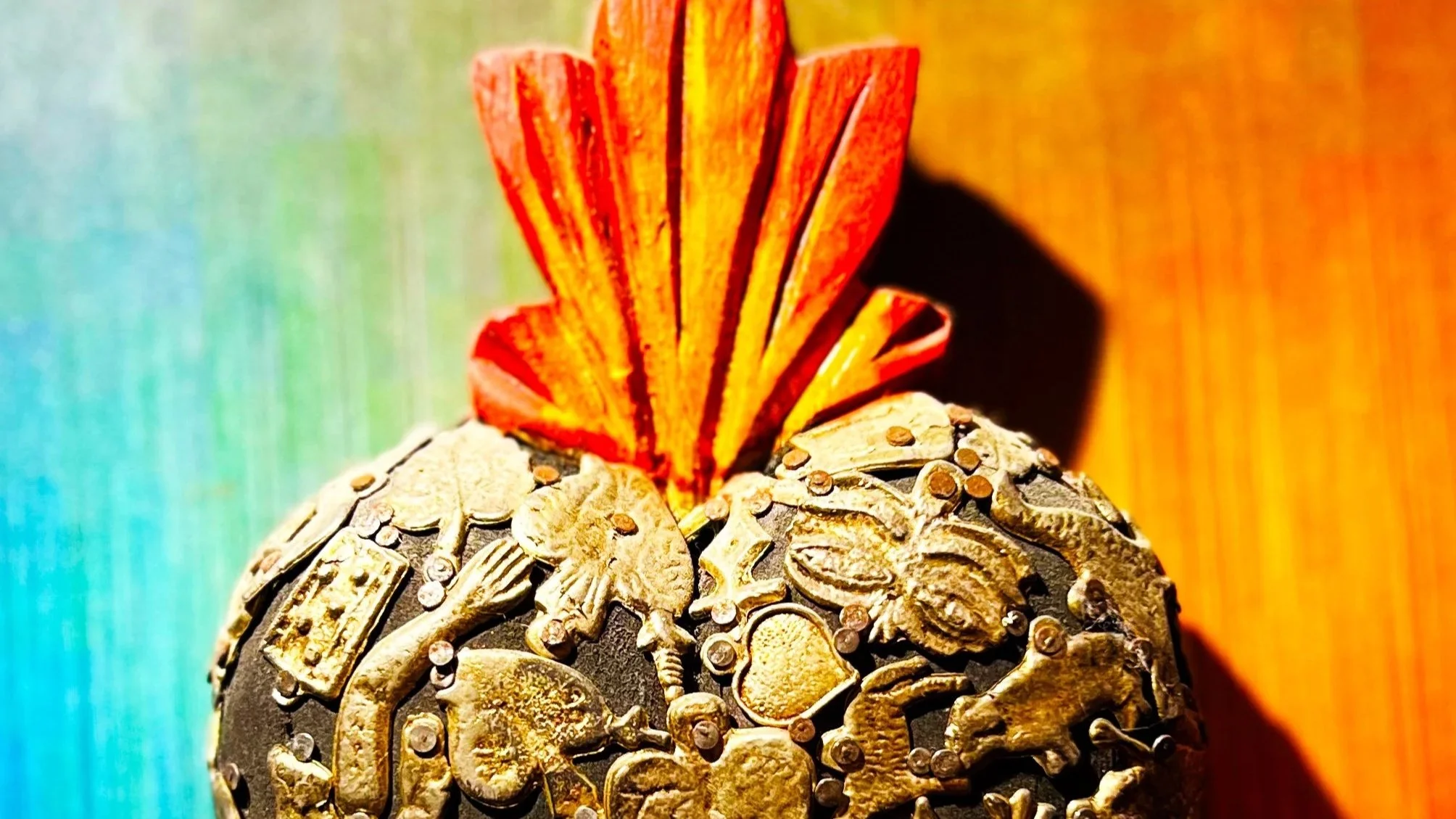
Maybe my life was scheduled for bizarre and fortuitous events more than most. To begin with, I am named for a child born with congenital heart disease, programmed, and then dead within days. Second, I was not meant to be born. My mother was aborting naturally in the fourth month and the doctor and she decided to frustrate nature with massive doses of progesterone to tighten the walls of the womb. She had to have injections throughout the pregnancy—this would have been in 1961. When I first made it to the coast and enrolled at Curtis in September of 1981, my mother wrote me a letter disclosing the medical intervention above, in which she concluded, “Ergo, somehow you were born out of the time continuum that would have given the first Daron a more sedate, predictable pattern.”

Then, at the age of fifteen, the sudden evolution of an interest and talent for music that seemed (according to my mother, at least) entirely unaccountable and self-generated. Its rapid development in about four years, from teaching myself the names of the notes to being accepted at Curtis, not to mention all the crazy coincidences like writing Helen Coates, and catching Leonard Bernstein’s ear—million-to-one shots, you’ve got to admit. I think I’m just one of those out-of-whack lives that occur sometimes and are as often a blessing as a curse.

I was born the sort of person for whom these junctures of coincidence were, especially early on, mostly benign and happily resolved. The trauma of my mother’s early and painful death darkened my internal path, but I think that the humane and mostly happy person that I labor to be, half a century later (both because of the example and expectations that she set for me, and for my family’s sake) is not so obnoxious that I am universally disliked.

I continue to try to express my gratitude properly to others, and to Providence, for the enormous generosity of spirit, forgiveness, and financial support people have given me over the years. I’ve made amends, tried to pay it forward. Mom noted in a letter to me shortly before she died, “You’re a gutsy little bastard who’s been swimming upstream against skepticism ever since you first decided to compose. That’s what makes the tough survive best.” Who knows? I always ran and identified with people older than me, while being treated as if I was younger. At this point, it appears that I’ve outlived the advice in Knock on Any Door to die young and leave a good-looking corpse, so I embrace the humbling process of being an anachronism just when I thought I was beginning to understand a few things. I never expected to live to thirty, then forty, then fifty, let alone through sixty, and open-heart surgery.

Diagnosed several years ago with the same congenital aortic atresia as my namesake, and informed that a surgical repair would need to be undertaken at some point, I (as most people do when preparing to undergo serious surgery) undertook the sort of mildly dissociative chore of wrapping up my affairs in case things went south. I arranged for my papers to go to the University of Wisconsin-Madison, finalized legacy publishing plans with Peermusic, and recorded the audiobook of the memoir while writing Exploring Operafilm at the Bogliasco Foundation in Umbria. Climbing the steep garden path from the composer’s studio up to the Villa each day for dinner, it became clear that the cold sweat, shallow breathing, and dizziness were not simply the lot of being an obese sixty-something, but a final stage of the disease.

A few months later at Yaddo, I felt a steady, inescapable weight and warmth in my chest, like the motor of a hand-held electric eraser overheating, the angry buzzing of a disturbed beehive. Walking painfully around the lakes I had run forty years earlier was a pretty clear indication that my health had reached an inflection point. Back home, long-scheduled diagnostic tests rolled within days into a tattoo of CBCs, CMPs, EKGs, and MRIs, followed by chest X-rays and a heart catheterization. The thoracic surgeon’s verdict was blunt: “We’ll fit you in next week.”

I asked them to play Mozart’s C Minor Mass in the operating room. I remember a few seconds of it before waking to the sensation of a breathing tube being pulled from my throat. The surgery was a success, but that night my pulse became wildly arrhythmic. My “galloping heart” felt exactly as though I had two simultaneous, independent and competing pulses creating what Joseph Schillinger called “the interference of periodicities.” Literally, I was of two hearts.

Correlative Alert: The Mayans used the phrase kyeb awanima (being of two hearts) to describe existential ambivalence. In the third century BCE, the Confucian scholar Xunzi used the phrase “two hearts” to describe a mind divided by conflicting pathways. Closer to home, Catholic theology delineates the Alliance of the Two Hearts—the intersection of divine mercy and maternal compassion. Similarly, the artist-anthropologist Tobias Schneebaum once noted to me that the Urapmin of Papua New Guinea define a state of moral contradiction prior to clarity as aget alep (two hearts).

I am of one heart now. Although I have felt all my life somehow metaphysically slightly out of time, or, as my mother intuited it in her letter, slightly “out of the time continuum,” that night in the hospital I felt, for a time, as though I had run out of it. I am now a year past the surgery, and fully recovered, thanks to brilliant doctors, patient family, and supportive friends. I’m glad to spare you the rest. It’s probably too soon to begin with the takeaways, but I cannot help feeling that, just as flagging my repetition of “time” as a stylistic tautology rather than a mimetic pulse would miss the point of the previous sentence, it would take a monster to poo-poo Sondheim’s lyric “Make of our hearts one heart.” Marching to our own etceteras, we share time, we steal it, buy it, waste it, save it, and kill it until, at last, it’s simply up. Up, like the anacrusis it always was, and whence? Maybe life is simply the way that independent pulses, lifetimes, moving at different tempos, occasionally fall into a symmetry so perfect that it feels like fate.
Tags Helen Coates, Leonard Bernstein, Yaddo, Bogliasco Foundation, Exploring Operafilm, J.S. Bach, Mozart, Tobias Schneebaum, Stephen Sondheim, Joseph Schillinger

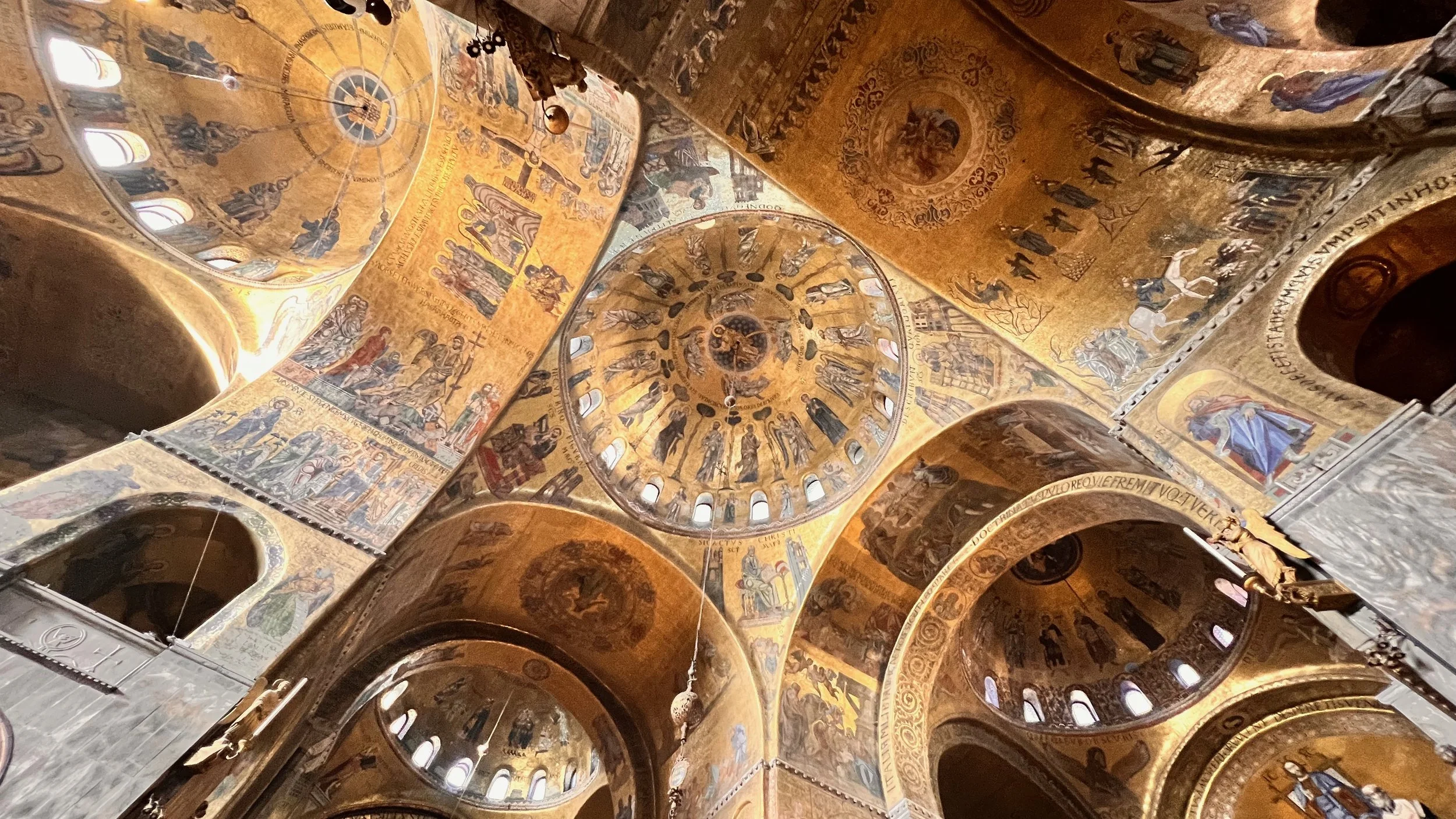
Basilica di San Marco, 5 March 2025 (p/c: Daron Hagen)

On Venice

March 28, 2025

First, the familiar ritual of crossing from the real world via the Ponte della Libertà to the Floating World; next, disembarking at Santa Lucia Station, thinking of the old violin professor’s farewell; finally, the people streaming down the graceful marble steps to the canal like water gushing in slow motion from a sluice. Limbo. At this point, stepping into any vaporetto, any ferryboat, will do: spoken Italian, German, Russian, very little English, the powerful, brutish diesel engine’s snarling as it is thrown into reverse, laughter trampolining off the water. I look up. Across the canal I see not a woman in a blue pea coat but a young girl in a white dress with a red ribbon holding an old man’s hand, her other hand shielding her eyes from the midday sun. Will I get off in Murano and visit the graves of Stravinsky, Nono, and Diaghilev at San Michele? Not this time; this time, only life in Venice. If a montage beat is notated in a screenplay with ellipses, then what is the musical equivalent?

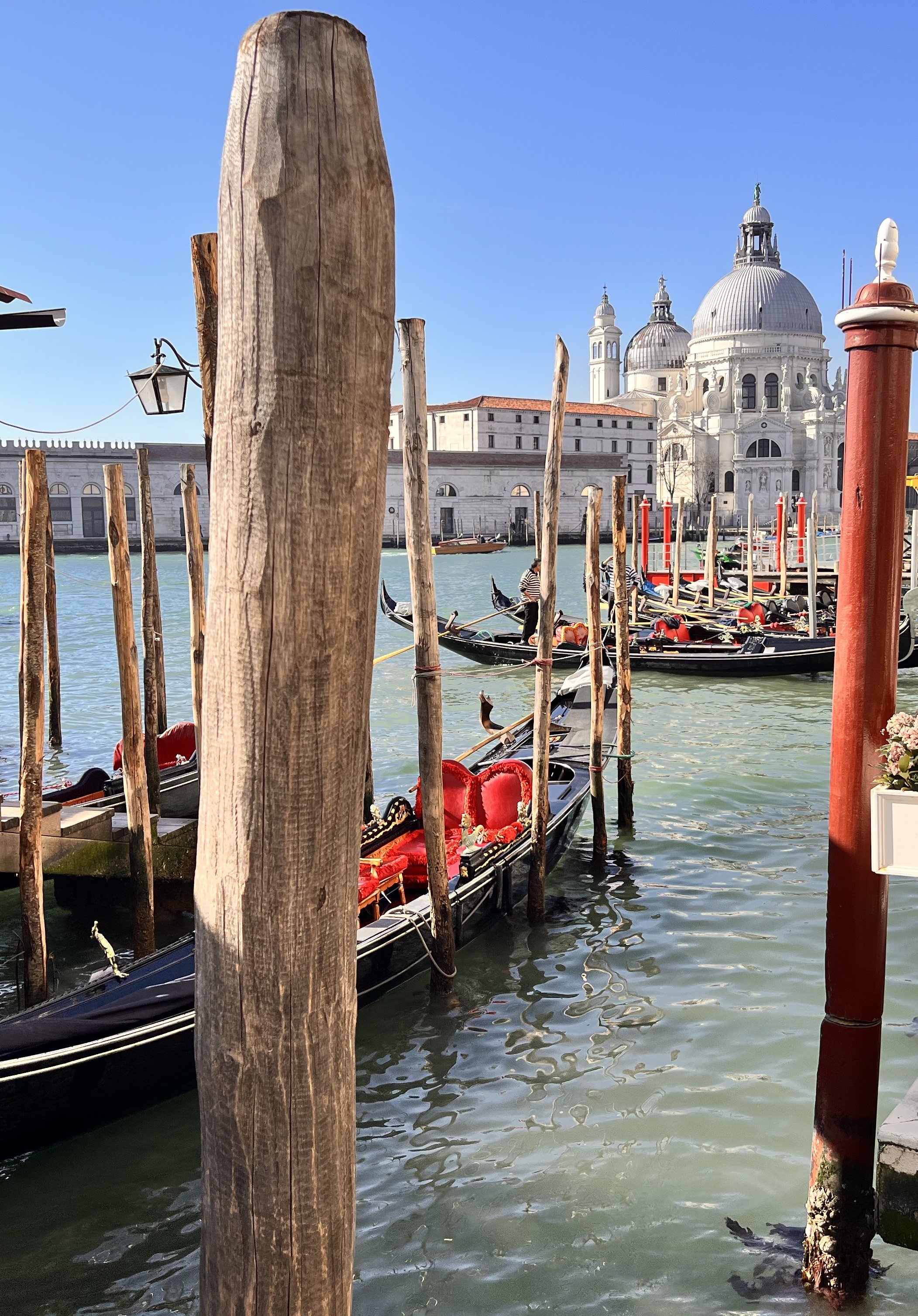
The picture you always see on tourist websites: the Basilica della Salute. (p/c: Daron Hagen)

Welcome back then, to the transience of Venice; ave to its addiction to suggestibility; a nod to our old acquaintances misattribution, and the persistence of forgetting. A toast to memories receding and growing more untrustworthy — particularly here, where the sweat that pools at the base of your spine when you’re late, rushing, and lost feels like sickness, the hand pressing on your chest is not hot, but cold, infinitely patient and macabre. “Is this how this story ends?” you ask yourself just at the moment you’ve become pre-syncopal and you’re about to accept that you’re trapped in an M.C. Escher engraving where the tops and bottoms of the stairways meet up, the last of a dozen sunless, serpentine calles suddenly opens up to the Canal Grande and the full force of the sun hits you and you stop dead, you lose your place, the narrative derails, you go up, you hear something for the first time in the orchestra that you shouldn’t have because you’re not playing your assigned part, your clammy shirt seizes up around you like a moist, limp handshake, and you suddenly understand, after all these years, what Dylan Thomas meant when he wrote that “old age should burn and rave at close of day.”

Fondamente Nove. Not the acqua alta in which I saw stars but the bright blue sky, dazzling sun scattering diamonds on the Adriatic wave tips. Not cheap rye from a silent Acheron-type bartender on a cold, windy, rainy night, but a cappuccino on the house from the waiter at the charming café that has replaced it. Pointing to my phone: “è morto,” I tell him, drawing my finger across my throat. Then, I didn’t have a phone number; this time the phone (and its GPS) died on the vaporetto from Santa Lucia, forcing me to be here. This spot. “Prego?” he asks. “No. Grazie.” Not lire, but euros on the table in front of me. I pull out my book. This I must remember on my own.

The very light pressure I use when sketching with my lucky mechanical pencil. Deep breath. Very long exhalation. Eyes closed. Focus pull. First the faint, straight tic tac toe of a map, then, opening my eyes, I attach the names I can remember: R to next street. R on Boteri. L on Cordoni. L on del Volta. R on 1st street (on R). Boca. Scanning the page, thinking, did I even know what a Rack Focus was back then? Yes, but I didn’t think that way then: it was all raw and wet and cold and febrile.

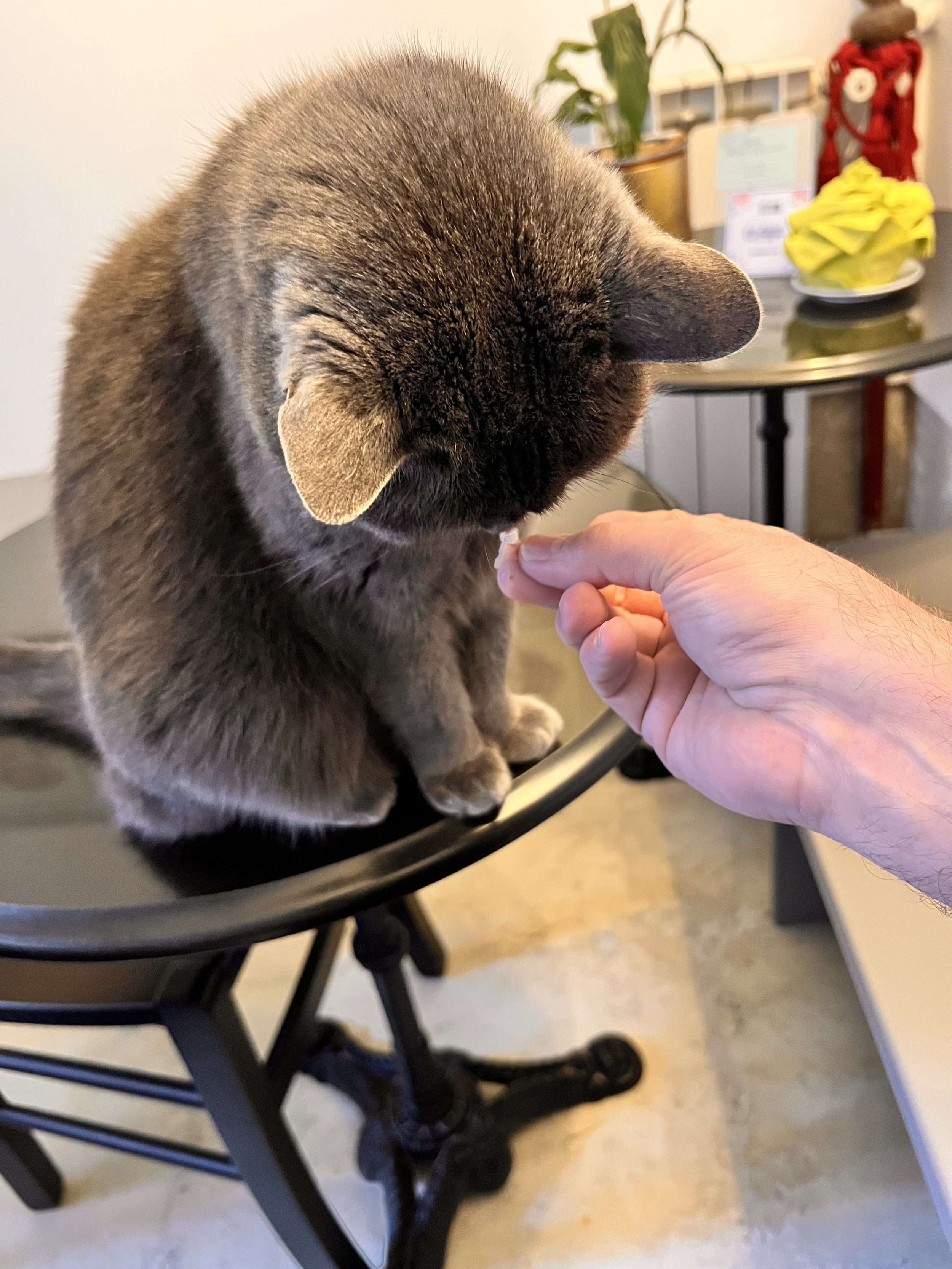
No laptop; just this book. Checking in to the Casa Boccassini, I hand over my passport. “I’m sorry – Scusi,” I say, without thinking. In English she replies, “you think you’re sorry, I’m Russian” and we leave it at that. A cat jumps on the counter in front of me, purring. Ariel, who has succeeded the polydactyl mouser Muse, who got out the front door one night never to return, and who I learn was in fact not blind, it was the dog who was blind, but I never knew him, so I had combined them in memory.

Ariel, Casa Boccassini’s house cat. (p/c: Daron Hagen)

In the absolute silence of 4 in the morning, awakened by the dings of my sons bidding me sweet dreams as they go to bed in New York six hours earlier, I think of Katherine Mansfield’s critique of Woolf’s Night and Day not reflecting the atomizing effect of the war. But now there is no night, no day, no Day for Night; the 24/7 news cycle and the Internet has ended all that. And here we are, now hurtling once again nella fauce del cane. I send them both heart emojis and mute the phone. But I’m up. The fear of forgetting. Scribbling, fast, in this book: working the whole thing out as a screenplay in my dreams. Closing the book, I try to get back to sleep, but remain hypnagogic.

Dings from the group chat of my colleagues at the Bogliasco Foundation, where I’m writing a book about making operafilms. They’re sharing pictures of the sunrise in Liguria. Now I am experiencing dormiveglia (the liminal zone of being half-asleep or semi-conscious). I can access my dream, which is as clear as a film: it is Carnevale and, earlier today, the angry vendor who hisses, “you wait for the priests to pass” as he holds the lapel of my leather jacket as I try to pass him; the real priests first, then the people beating taiko drums, then the celebrators dressed as celebrants, then the plague masks. “Now you go.” A slow walk to the Accademia to buy a book and pastries for the gang back in Liguria at Pasticceria Toletta, touching the trunks of the sycamores and noting the unchanging changing light, and then a fermata to light a candle at the Chiesa di San Moise for Bernie before walking to San Marco, stopping for dinner at Ristorante da Ivo, specials written by hand on the wall, everything unchanged, reading Bazin’s essays and arguing in the margins as I have since my teens, the long walk back by memory to the Cannaregio, stopping to watch people and to catch my breath and….

The Courtyard at Casa Boccassini (p/c: Daron Hagen)

The rosewater used to launder the sheets gives the room “the loved one” smell. I can no longer bear it. The sun has risen. I must get out. Like the old days, I’ve nothing to pack but my book bag, so I draw the sweaty sheets up on the bed, check for my passport, and pick up the key I’ve accepted for decades. I descend the steps to the garden and sit by the empty fountain to write about the female pilot throwing the lever earlier on the vaporetto: Charon, I think, which is pronounced Karen, I muse, asking her for her name, which is Serena. Had to be. “Serenissima,” I laugh, “were you born here?” “Of course,” she says. I raise my left hand to orans position and silently offer a greeting to the spirit of my old friend Frederick Hammond, who first introduced me to this hotel when we taught together at Bard College and, year after year, stayed here while working on his Frescobaldi treatise. It occurs to me that I was right when I wrote in my memoir, “Yes, this is how this story finally ends.” This gentle riff is enough. Not Muse, but Ariel, marks my legs and I reflexively reach down to scratch her neck, seeing that breakfast has been laid in the room just off the garden. All here is as it was and shall ever be, though the names and people will change.

Ariel means lion of God, I recall while standing in the Basilica di San Marco on my way back to Santa Lucia, about 24 hours after arriving. Soundtrack cue Monteverdi's Lasciatemi morire mixed with Welles V.O. “Maybe a man’s name…” from F for Fake under slow pan east-to-west looking straight up into the basilica’s cupola as I recall the conversation I had with Ford Lallerstedt in 1998 about the way that this specific physical space shaped Claudio Monteverdi’s counterpoint and how that effect might be reproduced visually. I take a picture with my resurrected phone of the sun shining through the stained-glass windows. Why try to put this moment behind bars? I think, erasing it. “You wait for the priests to pass,” he said. “All used up,” Dietrich said to Quinlin. “So, then, why not?” sigh the stones of Ruskin’s Venice, and I take another picture, one with which I will begin a new story, a new sequence of shots, a new tune whose cumulative effect will be … will be to be.

Tags Igor Stravinsky, Luigi Nono, Sergei Diaghilev, Ford Lallerstedt, travel writing, Claudio Monteverdi, Bogliasco Foundation, Dylan Thomas, M.C. Escher, John Ruskin, Frederick Hammond, Orson Welles, Greta Garbo, Marlene Dietrich, Bard College, Virginia Woolf, Katherine Mansfield
Featured
On Pulse
October 13, 2026
On Pulse
October 13, 2026
Read more →
October 13, 2026
On Ned Rorem (1923-2022)
June 25, 2026
On Ned Rorem (1923-2022)
June 25, 2026
Read more →
June 25, 2026
On Fatherhood
May 6, 2026
On Fatherhood
May 6, 2026
Read more →
May 6, 2026
On Teaching
May 6, 2026
On Teaching
May 6, 2026
Read more →
May 6, 2026
IMG_0766.png
April 27, 2026
On Notes
April 27, 2026
Read more →
April 27, 2026
best_music_face.png
February 12, 2026
On Montage
February 12, 2026
Read more →
February 12, 2026
On Composing
January 30, 2026
On Composing
January 30, 2026
Read more →
January 30, 2026
On Nicaragua
December 7, 2025
On Nicaragua
December 7, 2025
Read more →
December 7, 2025
Screenshot 2025-11-17 at 5.43.35 PM.png
November 17, 2025
On Working
November 17, 2025
Read more →
November 17, 2025
On Vocal Scores
November 2, 2025
On Vocal Scores
November 2, 2025
Read more →
November 2, 2025
On Orchestrating Brahms
October 2, 2025
On Orchestrating Brahms
October 2, 2025
Read more →
October 2, 2025
On Performing
September 3, 2025
On Performing
September 3, 2025
Read more →
September 3, 2025
On Music Copying
May 4, 2025
On Music Copying
May 4, 2025
Read more →
May 4, 2025
On Teachers
April 24, 2025
On Teachers
April 24, 2025
Read more →
April 24, 2025
On Venice
March 28, 2025
On Venice
March 28, 2025
Read more →
March 28, 2025
On Singing Beautifully
April 9, 2024
On Singing Beautifully
April 9, 2024
Read more →
April 9, 2024
On David Del Tredici (1937-2023)
March 18, 2024
On David Del Tredici (1937-2023)
March 18, 2024
Read more →
March 18, 2024
IMG_9973%2B2.jpg
January 28, 2024
On Being Ready
January 28, 2024
Read more →
January 28, 2024
On Composing "Shining Brow"
December 6, 2023
On Composing "Shining Brow"
December 6, 2023
Read more →
December 6, 2023
On Louis Krasner
November 2, 2023
On Louis Krasner
November 2, 2023
Read more →
November 2, 2023
On Onegin, the Perfect Libretto
June 25, 2023
On Onegin, the Perfect Libretto
June 25, 2023
Read more →
June 25, 2023
On Ned Rorem's Our Town
July 12, 2022
On Ned Rorem's Our Town
July 12, 2022
Read more →
July 12, 2022
On Burt Bacharach (1928-2023)
April 15, 2022
On Burt Bacharach (1928-2023)
April 15, 2022
Read more →
April 15, 2022
Orson Rehearsed: Naxos Explore Classical Music Interview
June 26, 2021
Orson Rehearsed: Naxos Explore Classical Music Interview
June 26, 2021
Read more →
June 26, 2021
Orson Rehearsed Interview: New York Arts and Cinema
May 7, 2021
Orson Rehearsed Interview: New York Arts and Cinema
May 7, 2021
Read more →
May 7, 2021
Screen%2BShot%2B2021-01-10%2Bat%2B7.48.35%2BPM.jpg
December 7, 2020
Orchestrating a Psychological Landscape -- Interview: Fullshot Cine Mag
December 7, 2020
Read more →
December 7, 2020
Screen+Shot+2020-05-06+at+3.06.37+PM.jpg
November 23, 2020
An Affair of the Heart -- Interview: Toronto Film Magazine
November 23, 2020
Read more →
November 23, 2020
Orson in the Bardo -- Interview: Wellesnet.com
November 7, 2020
Orson in the Bardo -- Interview: Wellesnet.com
November 7, 2020
Read more →
November 7, 2020
"Orson Rehearsed" Interview: Chicago Movie Magazine
October 12, 2020
"Orson Rehearsed" Interview: Chicago Movie Magazine
October 12, 2020
Read more →
October 12, 2020
mel.jpg
November 3, 2017
On Mel Rosenthal (1940-2017)
November 3, 2017
Read more →
November 3, 2017

Copyright © 1999-2026 Burning Sled Media
[site search]